




Kitchen Tile Mural Ideas: Stunning Backsplash Designs for Your Home
February 3, 2026
Vintage Bathroom Tile Ideas: Classic Looks, Timeless Style
February 10, 2026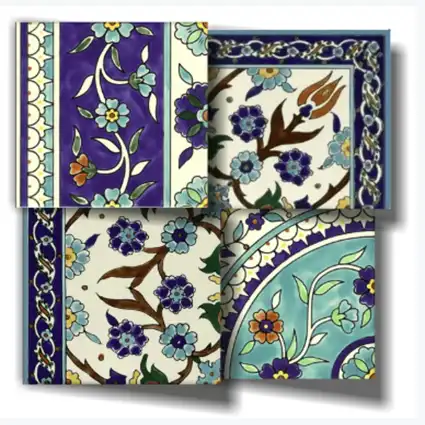
Artistic Tile Design: Creative Ideas, Types, and Inspiration
Artistic tile design sits at the intersection of interior architecture and visual storytelling, where tile becomes more than a finish and starts functioning like a permanent artwork. From geometric patterns that sharpen a modern kitchen to hand-painted murals that carry cultural symbolism, artistic tiles can transform everyday surfaces into focal points that feel intentional and personal.
In this guide, you’ll learn the core types of artistic tile design, where each one works best, how to choose the right style and material for your space, and how to balance statement tiles with calmer finishes. You’ll also find inspiration from Balian Ceramics, a heritage maker known for hand-painted ceramic tiles and murals crafted in a tradition that has continued since 1922.
What Is Artistic Tile Design?
Artistic tile design is defined by intention: design choices that prioritize beauty, creativity, and meaning, not just coverage.
Definition and Essence
At its core, artistic tile design uses pattern, color, imagery, and composition to create a visual moment in a space. This may show up as a mural behind a range, a rhythmic geometric floor, or a set of hand-painted tiles that feel like collectible art. The goal is not simply decoration, it’s atmosphere, identity, and impact.
Historical Background
Tile art has deep roots in architectural history, from ancient mosaic traditions to the ornamental tilework seen across Mediterranean design and beyond. While the techniques and materials have evolved, the purpose has stayed remarkably consistent: to preserve beauty on surfaces people live with every day.
Where It Is Used
Artistic tiles can be applied almost anywhere, including:
- Walls: Feature panels, fireplace surrounds, entry statements
- Floors: Patterned layouts, medallions, “tile rug” effects
- Backsplashes: Mural centers, accent bands, stove walls
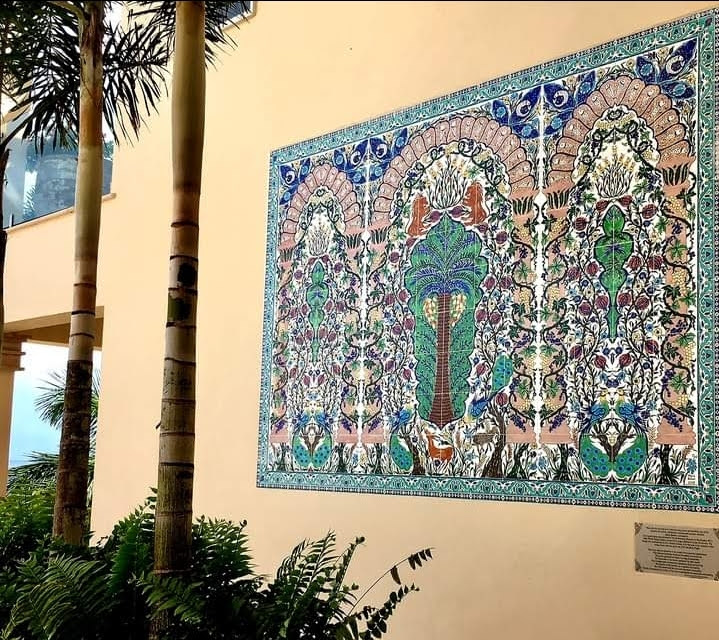
- Murals and Custom Installations: Narrative scenes, symbolic artwork, branded compositions
Why Artistic Tile Design Matters
Artistic tile is one of the few design choices that can be both expressive and highly practical.
Visual Impact
A single well-placed tile focal point can define an entire room. It can create structure (through geometry), softness (through organic motifs), or drama (through bold contrast). In design terms, artistic tile often acts as the anchor that makes the rest of the palette feel coherent.
Personal Expression
Artistic tiles allow you to bring personality into the home in a way that feels elevated. This might mean cultural motifs, nature themes, symbolic imagery, or colors that reflect your taste. Custom or artisan tilework can also carry a narrative, something that feels meaningful rather than purely trend-driven.
Functional Art
Tile is durable, easy to clean, and well-suited to moisture and heat. Artistic tile design adds an aesthetic layer without sacrificing performance, especially when the material is selected properly for the environment.
Versatility
Artistic tiles can work in:
- kitchens and bathrooms (high use, high visibility)
- living spaces and entryways (statement architecture)
- hospitality and retail (brand identity, ambiance)
- outdoor areas and pools (weather-rated art surfaces)
Types of Artistic Tile Design
Different artistic tile styles create different visual languages, from minimal rhythm to detailed storytelling.
Geometric and Abstract Tile Designs
Geometric tile designs rely on clean lines, repetition, symmetry, and controlled contrast. They’re ideal for modern and minimalist spaces because they add energy without visual clutter. Abstract designs can be softer, more fluid, painterly, or intentionally imperfect, while still feeling contemporary.
Hand-Painted Tiles
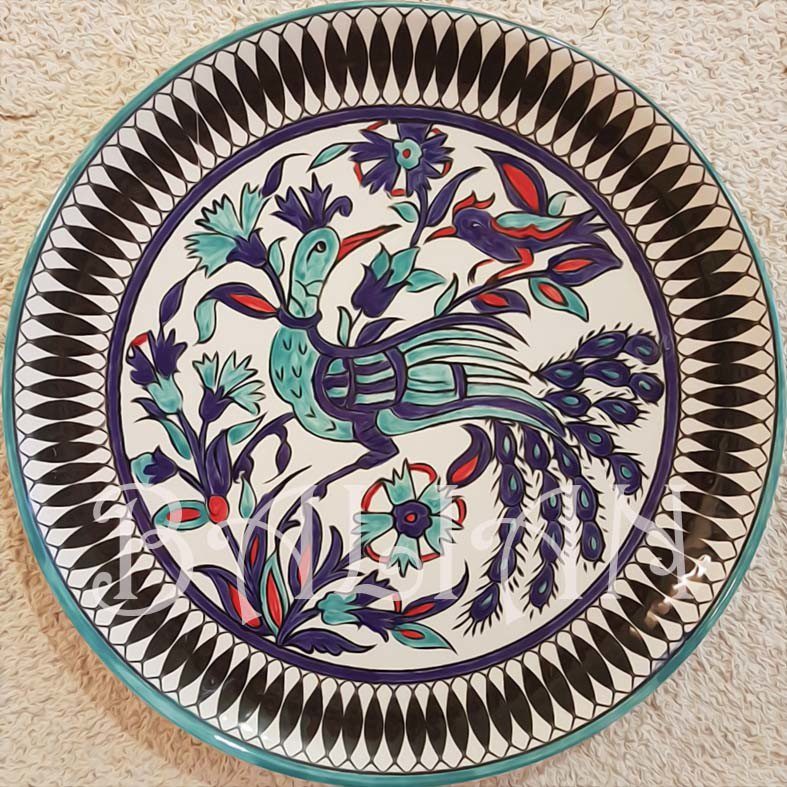
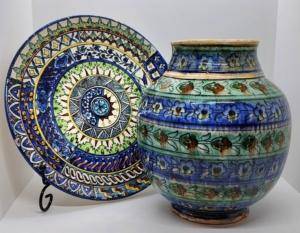
Hand-painted tile is one of the most distinctive forms of artistic tile design because each piece carries a human touch. Even when patterns repeat, they retain a handcrafted variation that makes a surface feel warm, curated, and unique.
Large Format Artistic Panels
Large format panels create graphic impact with fewer grout lines. They’re often used in modern designs where a bold composition is preferred, think oversized florals, abstract linework, or simplified scenic artwork. The effect is clean and dramatic.
Patterned and Repetitive Tile Designs
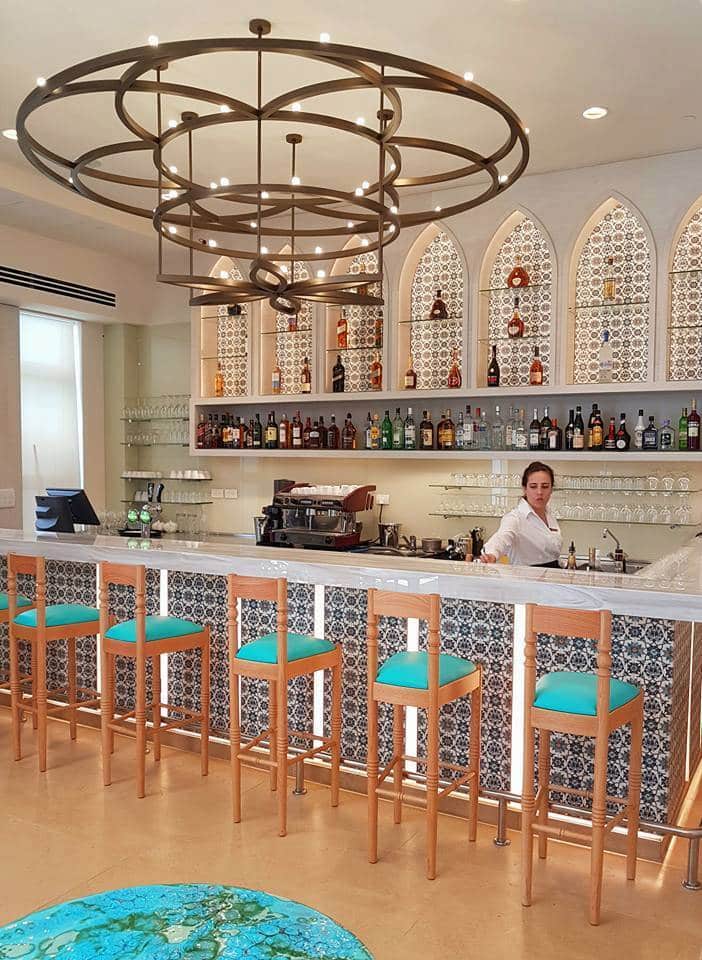
Patterned tiles use repeating motifs, arabesque, floral, medallion, or modern iconography, to create rhythm and texture. This is a strong option when you want consistency across a larger surface (like a full backsplash or powder room wall) while still keeping artistic personality.
Artistic Tile Design by Space
The same design can feel completely different depending on where it’s placed, how much of it is used, and what surrounds it.
Kitchen Designs
For kitchens, the most popular placement is the backsplash, especially behind the range or sink.
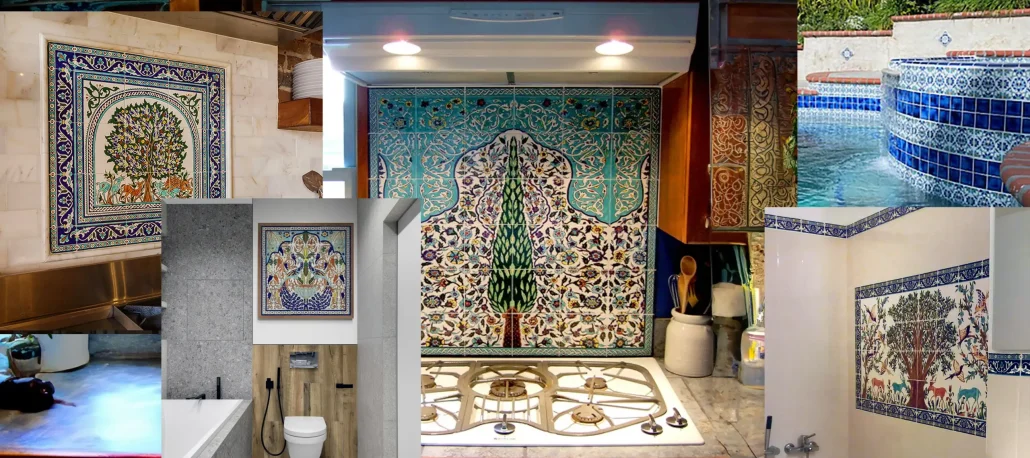
- Backsplash Murals and Accent Walls: A framed focal area can elevate the entire kitchen without overwhelming it.
- Balancing Statement with Simplicity: Pair artistic tiles with solid field tiles so the design reads intentional and premium rather than busy.
Bathroom Designs
Bathrooms are ideal for artistic tile because tile is already expected in wet zones.
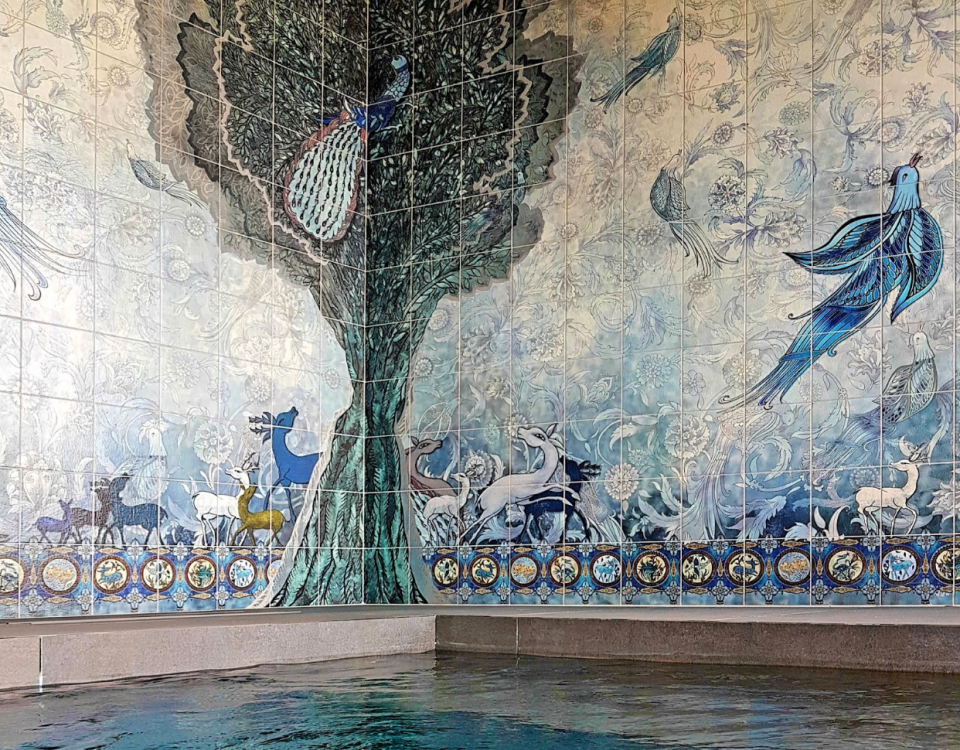
- Shower Art Panels and Feature Walls: A single mural wall can become the signature of the room.
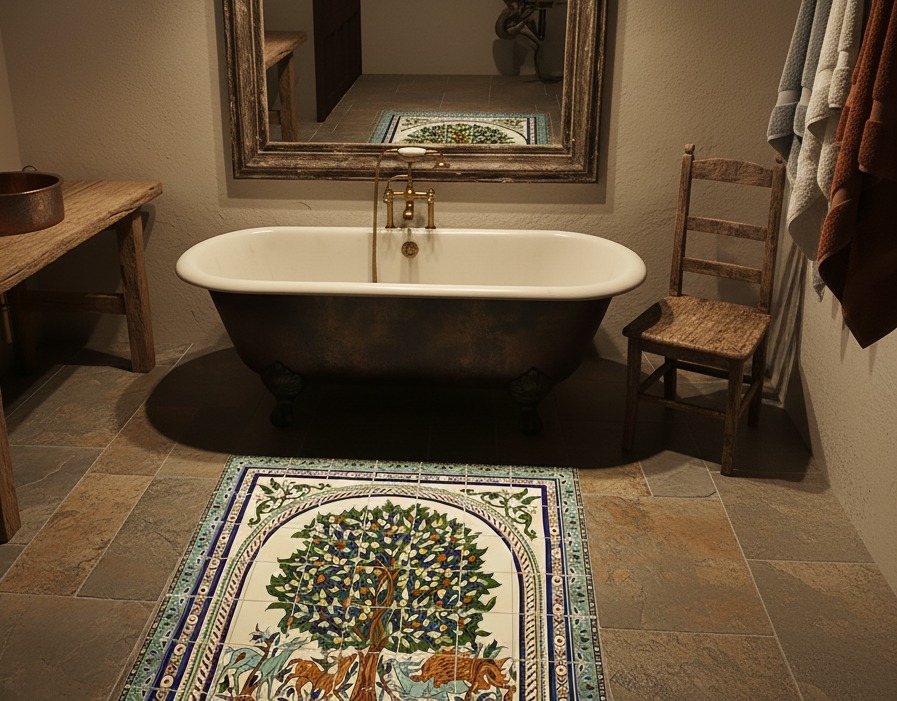
- Floor Patterns That Draw the Eye: Patterned tile floors work especially well in powder rooms, where a small space can handle more visual energy.
Living and Entry Spaces
These spaces benefit from tile art that feels architectural.
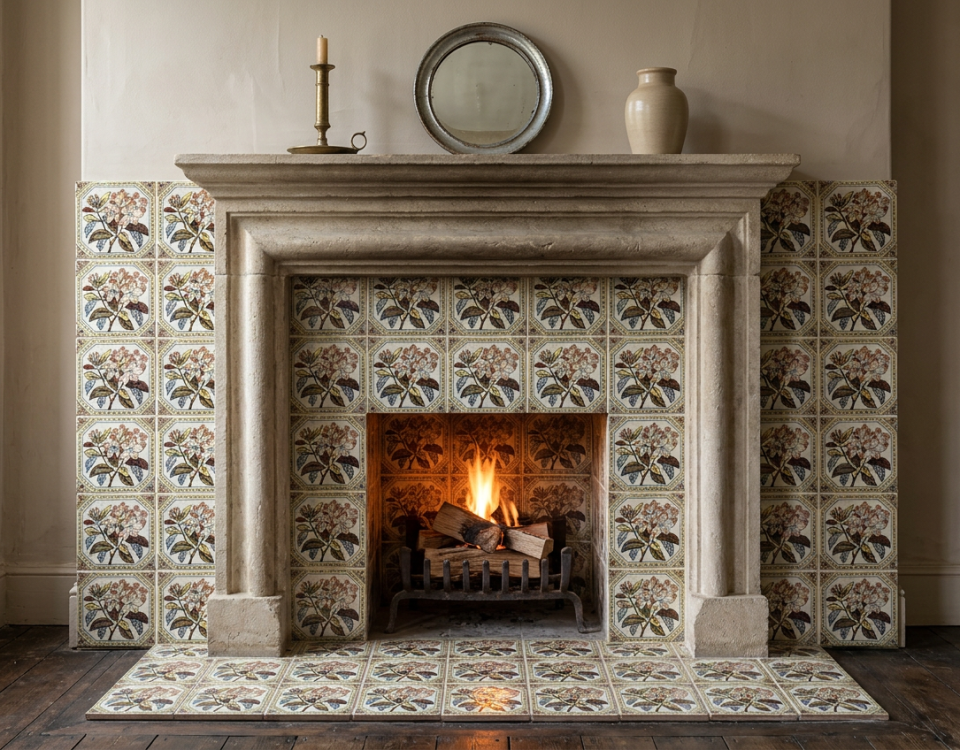
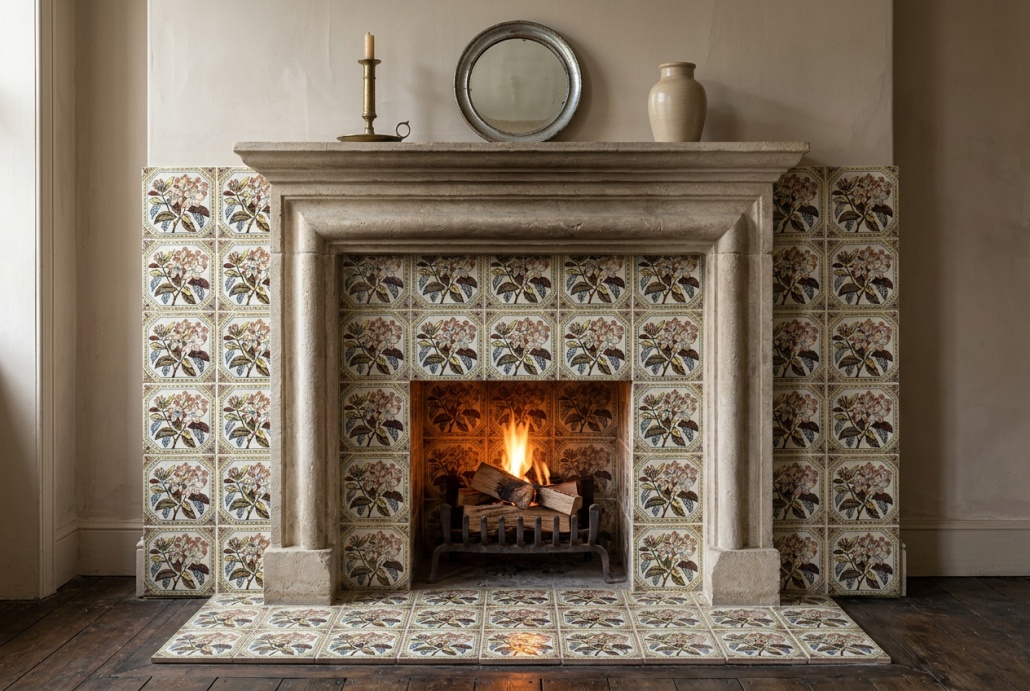
- Accent Walls: Great for fireplaces, niches, and transitional walls.
- Tile Rug Floors: A defined patterned area can visually organize entryways or open layouts without adding furniture.
Outdoor and Pool Areas
Outdoor artistic tile design should prioritize durability and correct installation methods.
- Weather-Resistant Mosaics and Art Panels: Great for patio walls and garden features.
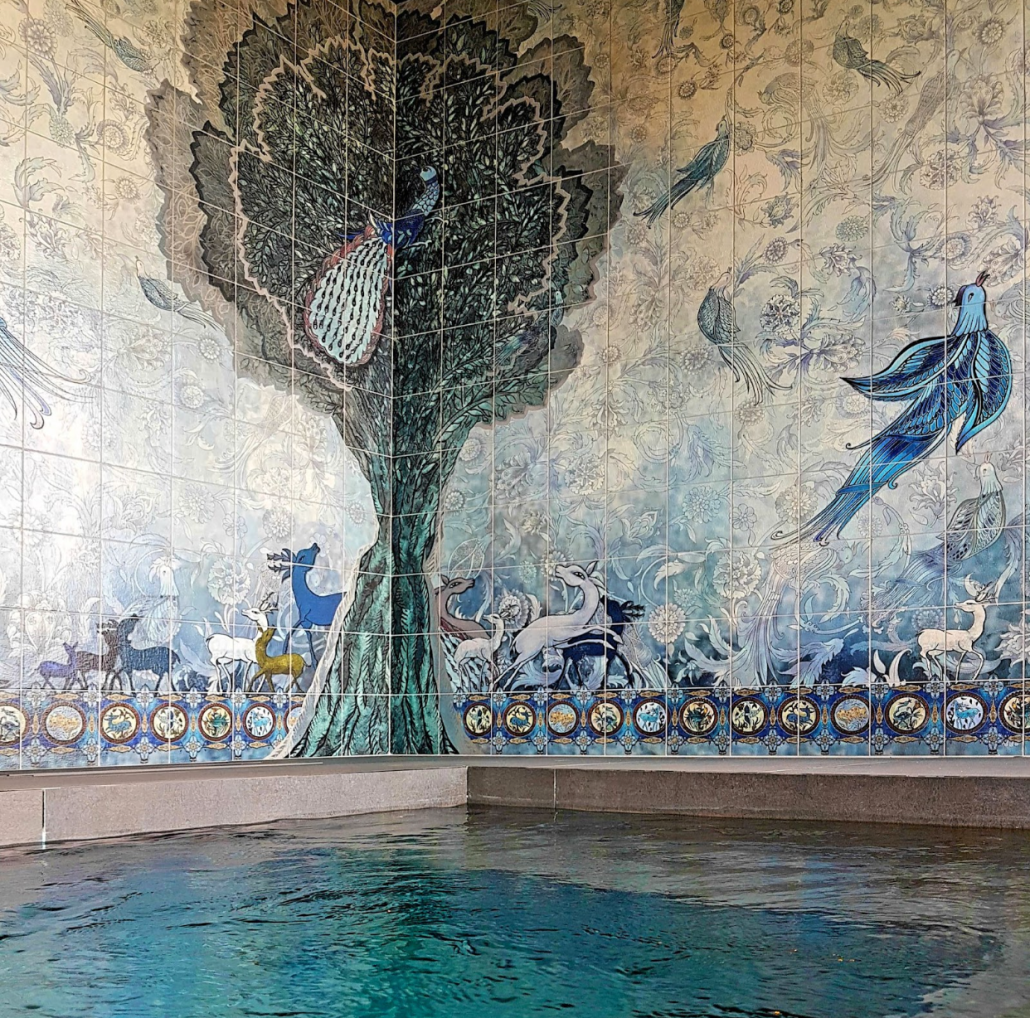
- Landscape Integration: Tile can frame fountains, outdoor kitchens, seating walls, and pool surrounds for a cohesive destination feel.
How to Choose the Right Artistic Tile Design
Choosing well comes down to aligning style, scale, and material with the way the space is used.
Match to Architectural Style
- Modern/Minimal: Geometric, abstract, clean palettes
- Classic/Traditional: Botanical motifs, framed murals, heritage-inspired patterns
- Eclectic: Mixed motifs with a unifying palette
- Transitional: One focal art moment paired with quieter finishes
Color and Palette Choices
Color changes perception. Lighter palettes open spaces and feel airy; deeper tones add intimacy and drama. If the mural or patterned tile is your focal point, keep surrounding finishes calmer so the art remains the star.
Scale and Detail
Large, bold patterns are best when you have enough visual breathing room. Smaller tessellations and intricate linework can work beautifully up close, especially in showers, niches, and backsplash focal panels.
Material Matters
- Porcelain: High durability, strong for floors and wet zones
- Ceramic: Expressive color and artisan-friendly, excellent for decorative walls
- Glass: Luminous, reflective, striking in water features
- Stone: Organic variation often needs sealing and thoughtful care
Balance With the Space
A useful rule: let artistic tile dominate one primary surface, then support it with simpler field tile. This keeps the room elevated instead of visually overloaded.
Introducing Balian Ceramics
Balian Ceramics is known for artisan-crafted, hand-painted ceramic tiles and tile murals, with a family tradition that has continued since 1922. Our work is often associated with Mediterranean influences and a strong cultural design heritage, expressed through detailed motifs and storytelling compositions.
- Craftsmanship and Style: Balian’s tile murals are hand-painted and fired at high temperatures for lasting color and durability, an approach that reinforces the idea of tile as functional art.
- Signature Design Inspiration: Our collections include thematic tile art that draws on nature, narrative scenes, and cultural motifs, often designed as framed mural panels that can serve as a backsplash centerpiece or architectural accent.
- Where Our Tiles Work Best Balian’s artistic tiles are frequently used in kitchens (backsplashes), bathrooms (feature walls), accent walls, and custom installations where a single visual statement can define the space.
- Custom Design Capabilities: At Balian Ceramics, we also offer bespoke tile options, allowing clients to share a desired concept, specify size and placement needs (interior/exterior; wall/floor/pool), and translate that vision into custom ceramic tiles.
Designing With Balian Artistic Tiles
- Selecting Patterns and Themes: Start with the role the tile should play: centerpiece mural, subtle accent, border rhythm, or full-surface pattern. Then choose a theme that complements the room’s tone: serene, energetic, classic, or contemporary.
- Mix and Match for Harmony: A reliable approach is to use Balian hand-painted tiles as the artwork, then frame them with simpler field tiles. This creates visual hierarchy and makes the installation look curated rather than crowded.
- Pairing With Materials: Artistic tile pairs especially well with:
- Wood: adds warmth and softness against glossy glaze
- Stone: enhances heritage character and organic texture
- Metals: sharpen contrast and modernize traditional motifs (brass, matte black, stainless)
- Installation Tips: For mural panels and hand-painted compositions, professional installation is strongly recommended. The layout must be planned precisely so alignment, spacing, and grout color support the artwork rather than distracting from it.
Maintenance and Longevity
- Cleaning Artistic Tiles:
- Ceramic/Porcelain: Gentle, non-abrasive cleaners for routine care
- Glass: Non-scratch products to preserve clarity
- Stone: pH-neutral cleaners; avoid harsh chemicals that can etch or dull
- Sealing and Protection: Sealing is often recommended for grout and for porous materials (especially natural stone) to reduce staining and moisture absorption. In wet zones, the right sealant strategy helps preserve both appearance and structure.
- Handling Wear and Tear: Keep spare tiles whenever possible, especially for custom or hand-painted work, so repairs can match the original design. For older installations, professional restoration is the safest way to maintain color continuity and protect the craftsmanship.
Frequently Asked Questions (FAQs)
- What’s the difference between artistic tiles and decorative tiles?
Decorative tiles typically refer to tiles used for visual interest, while artistic tile design usually involves stronger creative intent, storytelling, composition, or handcrafted variation that makes the tile read like an integrated artwork. - Are hand-painted tiles practical for kitchens and bathrooms?
Yes, when installed correctly and paired with appropriate grout and maintenance. Hand-painted tiles are commonly used for backsplashes and feature walls because they deliver impact while remaining easy to wipe clean. - Can I mix multiple artistic tile designs in one space?
You can, but it works best when there’s a unifying element: shared color palette, consistent scale, or one hero surface supported by quieter patterns elsewhere.
Artistic Tile Design That Elevates Everyday Spaces
The most successful artistic tile design choices combine visual storytelling with smart planning: the right style for the architecture, the right scale for the wall or floor, and the right material for the environment. Whether you prefer geometric rhythm, mosaic detail, hand-painted warmth, or bold large-format panels, artistic tiles can create a lasting focal point that feels personal, not generic.
And for those seeking heritage craft and distinctive visual identity, Balian Ceramics offers hand-painted tiles and murals rooted in a long tradition, along with custom options that help homeowners turn a specific vision into enduring tile art.