



Creative Pottery Painting Ideas for Mugs: Artistic Designs to Personalize Your Ceramic Cups
December 22, 2025
Shower Tile Ideas: 32 Styles, Layouts & Designs for US Bathrooms
January 20, 2026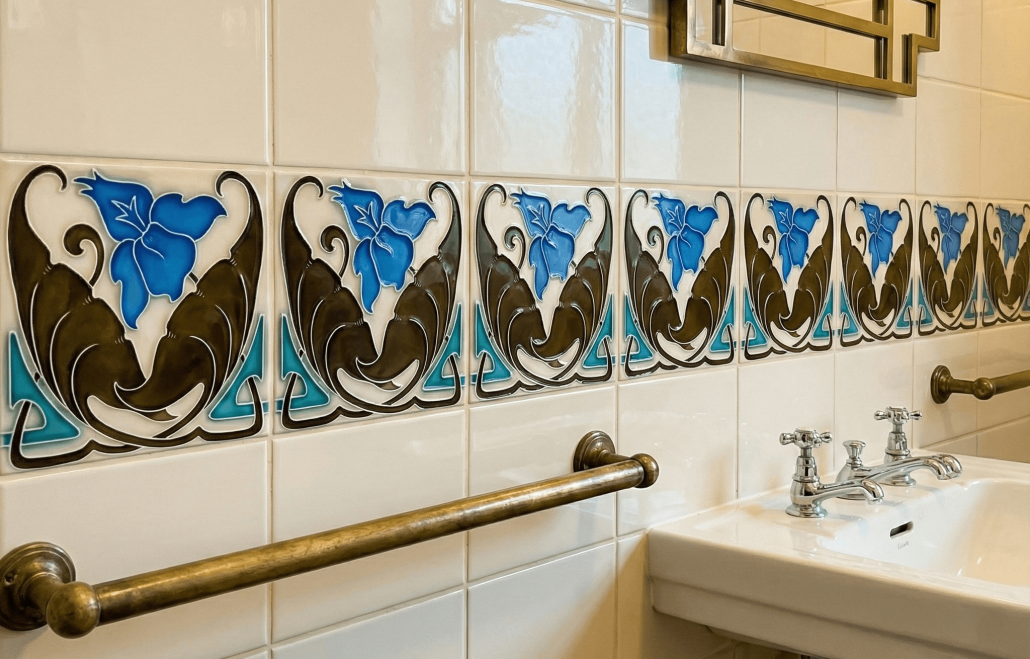
Art Deco vs. Art Nouveau: What Is the Difference Between Two Iconic Design Styles?
If you’ve ever saved interior inspiration and thought, “I love this, but I can’t name the style,” you’re not alone. Art Deco and Art Nouveau are often compared because both are visually distinctive, both shaped architecture and interiors, and both can completely change the mood of a space.
At the Balian Studio, we’ve spent more than 100 years mastering a “Total Art” philosophy: the belief that art shouldn’t only live in frames, it should live in the details you touch every day, like walls, floors, fireplaces, borders, and tile murals. And when we design a tile concept, the first step is often choosing your era.
Are you drawn to nature and softness, or structure and glamour? Here’s a clear guide to the Art Deco vs. Art Nouveau, such as history, defining traits, and how to choose the right look for your next project.
A Quick History of Art Nouveau and Art Deco
Art Nouveau (late 1800s to early 1900s)
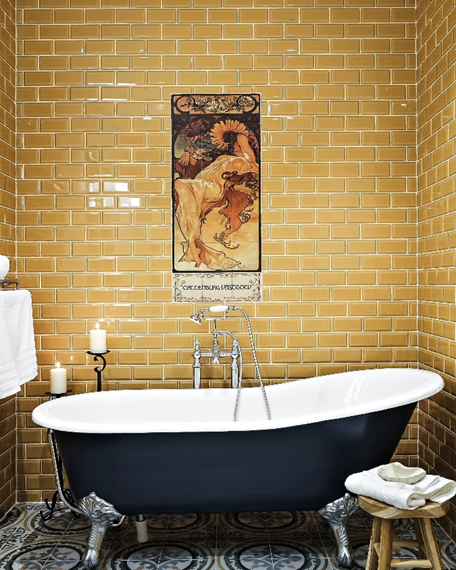
Art Nouveau emerged as a reaction against rigid academic design and mass-produced sameness. It celebrated craftsmanship and took inspiration from the natural world: vines, flowers, dragonflies, flowing hair, and curved stems. It’s expressive, romantic, and full of movement.
Art Deco (1920s to 1930s)
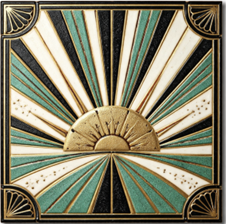
Art Deco arrived later, shaped by the energy of the modern age: jazz, skyscrapers, speed, and industrial progress. It favored bold geometry and symmetry, with patterns that feel engineered, such as chevrons, sunbursts, zigzags, and repeating motifs that look crisp and confident.
If you want the simplest summary, the difference between Art Nouveau and Deco is this: Nouveau is organic and fluid. Deco is geometric and structured. Nouveau was a rejection of industrial mass production (pro-craftsmanship). Deco embraced industrial materials (chrome, glass, steel).
Art Nouveau Design Traits: Nature in Motion
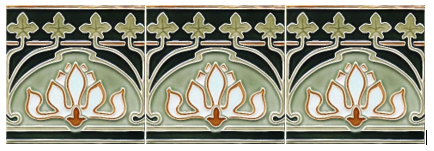
Art Nouveau is defined by flowing lines and natural forms. It doesn’t like sharp corners. It prefers designs that feel like they’re growing across a surface.
What you’ll notice in Art Nouveau interiors
- “Whiplash” curves: long, elegant lines that loop and sweep
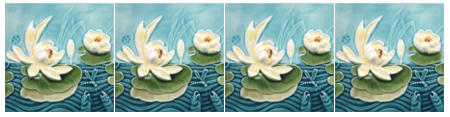
- Botanical motifs: flowers, leaves, vines, branches, insects
- Soft, romantic color palettes: often muted, earthy, and painterly
- Handcrafted feel: brushwork and detail are part of the charm
Art Nouveau within the Balian Collection
In our hand-painted work, Art Nouveau is where storytelling and ornamentation shine.
Featured style directions you’ll recognize:
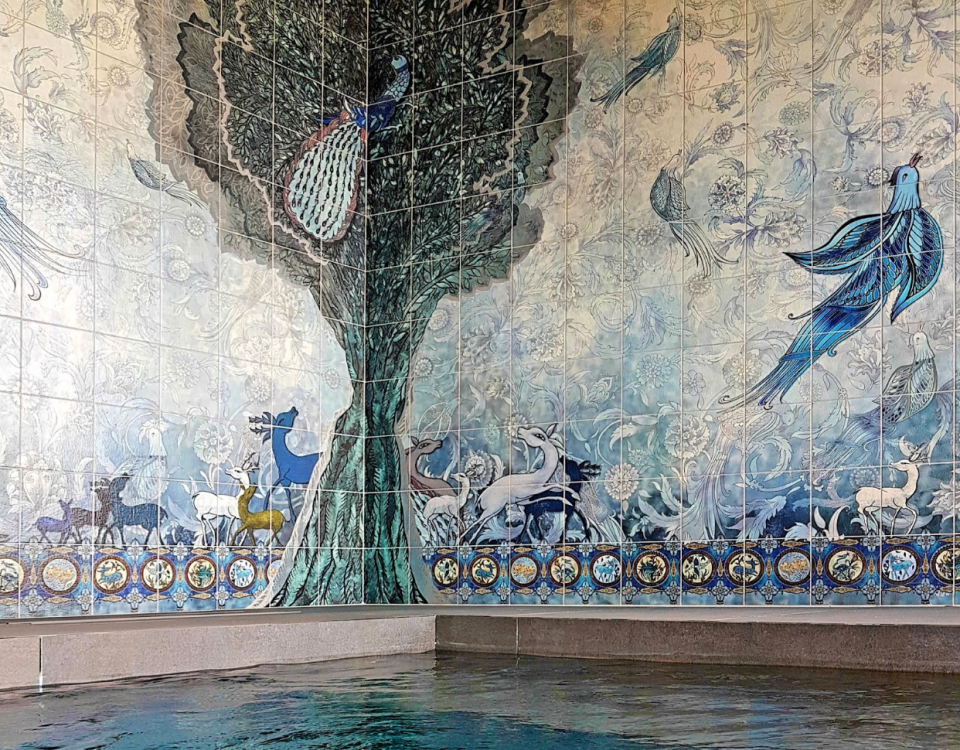
- Alphonse Mucha-inspired tile murals and reproductions
Mucha’s influence is instantly recognizable through graceful figures, ornamental halos, and flowing composition. These designs pair beautifully with gentle palettes that feel warm and artistic rather than loud. - Fluid borders and floral frames
Instead of strict lines, Nouveau borders tend to move, creating softness around niches, backsplashes, door frames, or fireplace surrounds.
Best for: serene bathrooms, romantic entryways, heritage restorations, artistic tiled kitchens, boutique hotels, and spaces where you want warmth and craft to be the focal point.
Art Deco vs. Art Nouveau: Side-by-Side Comparison
Here’s a quick way to remember Art Deco and Art Nouveau without overthinking it:
Deco: “high-contrast” tones (black, silver, chrome, emerald, navy)
Inspiration
- Nouveau: nature, craftsmanship, romantic art
- Deco: machines, architecture, modern luxury
Lines
- Nouveau: curved, flowing, asymmetrical
- Deco: straight, angular, symmetrical
Patterns
- Nouveau: vines, florals, figures, organic movement
- Deco: chevrons, sunbursts, stepped shapes, repeats
Mood
- Nouveau: soft, poetic, artistic
- Deco: bold, polished, glamorous
Color
Nouveau: “earthy” tones (sage green, mustard, muted gold)
Which Style Should You Choose for Your Project?
If you’re deciding between the two, don’t just pick what looks “prettier.” Pick the style that matches how you want the space to feel.
Choose Art Nouveau if you want…
- A calming, artistic atmosphere
- A space that feels handcrafted and expressive
- Soft movement, natural motifs, and romantic detail
- A design that pairs beautifully with vintage architecture or warm materials
Choose Art Deco if you want…
- A confident statement and visual structure
- Clean lines that look modern and architectural
- A sense of luxury, rhythm, and symmetry
- A strong focal point (backsplash, fireplace, entry wall, or border)
And yes, mixing is possible. Many designers use an Art Deco floor with a gentler, Art Nouveau-inspired mural, or combine Deco geometry with botanical accents for a balanced “new vintage” look.
Preserving the Legacy: Why Craft Matters
Whether you’re restoring a historic interior or creating a custom mural for a new home, craftsmanship is what turns a style into something lasting.
At the Balian Studio, each piece is made to endure, with traditional firing processes (over 1000°C) that support long-term durability. The goal is simple: whether you choose the curves of the past or the angles of the future, your tiles should stay beautiful for generations.
Ready to choose your era? If you’re exploring vintage style with lasting craftsmanship, you can browse the Balian Studio’s vintage and reproduction tiles.

FAQs: Art Deco and Art Nouveau
1) What is the difference between Art Deco and Art Nouveau?
Art Nouveau is organic and flowing, inspired by nature. Art Deco is geometric and symmetrical, inspired by modernity, architecture, and luxury.
2) Which style is older: Art Nouveau or Art Deco?
Art Nouveau came first (late 1800s to early 1900s). Art Deco followed (1920s to 1930s).
3) Is Art Deco more modern than Art Nouveau?
Visually, yes. Art Deco often feels more “modern” because of its clean geometry and architectural symmetry.
4) Can I use Art Nouveau in a modern home?
Absolutely. A single Art Nouveau mural, border, or backsplash can add warmth and artistry without making the whole home feel traditional.
5) Can Art Deco work in small spaces?
Yes, especially powder rooms and compact kitchens. Deco patterns can create a strong focal point in a small footprint.
6) What tile applications work best for each style?
- Nouveau: murals, botanical borders, soft feature walls
- Deco: backsplashes, floors, fireplace surrounds, crisp borders, graphic accents
7) Do these styles work for restorations?
Both do. Art Nouveau often fits ornate heritage spaces, while Art Deco suits early-20th-century buildings, foyers, and geometric architectural details.
8) What materials are typical for these styles in tile?
Art Nouveau tiles often feature raised ‘cuerda seca’ or tube-lined glazes to create organic ridges, while Art Deco tiles favor flat, high-gloss finishes and crisp, rectified edges for a machine-perfect look.