





The Ultimate Guide to Vintage Bathroom Tile
May 17, 2026
Ceramic Tile Art
June 2, 2026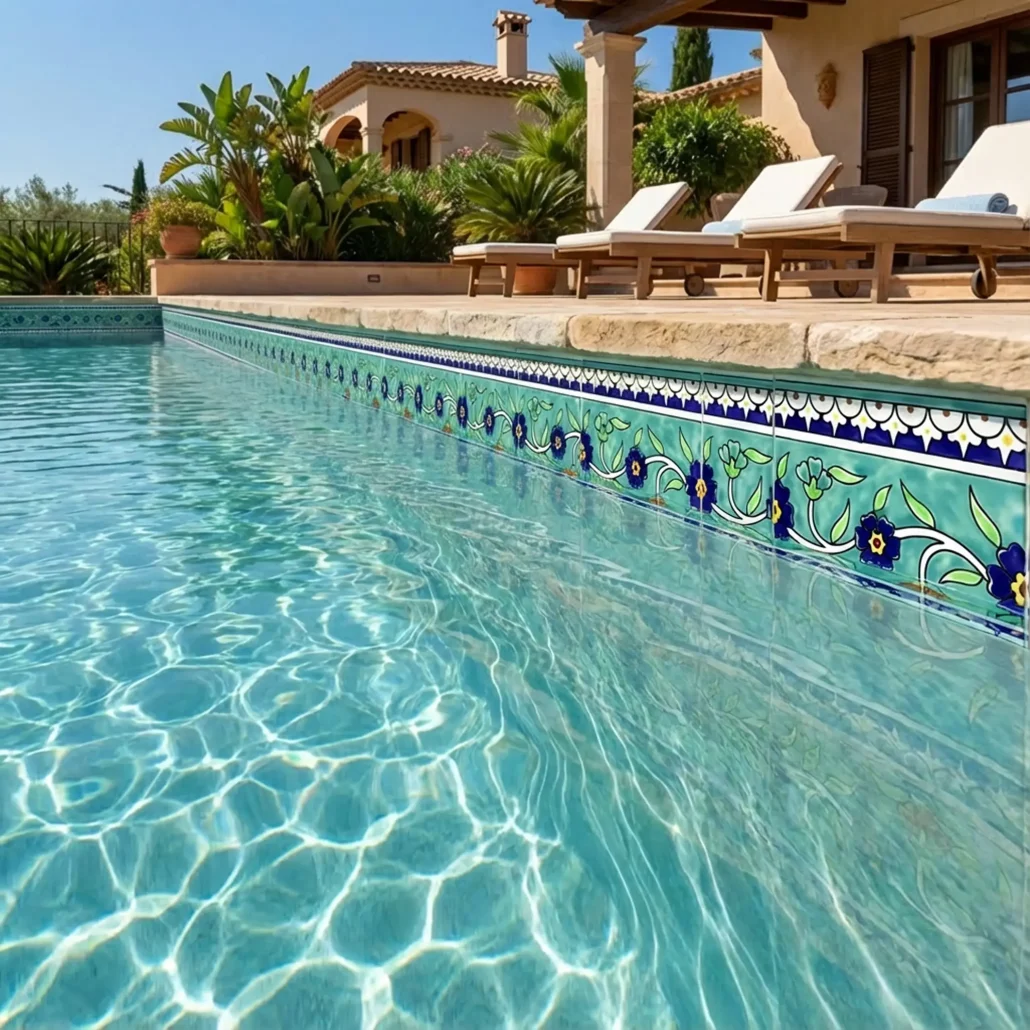
Waterline Pool Tile Ideas: 12 Hand-Painted Designs, Modern Styles and Costs (2026 Guide)
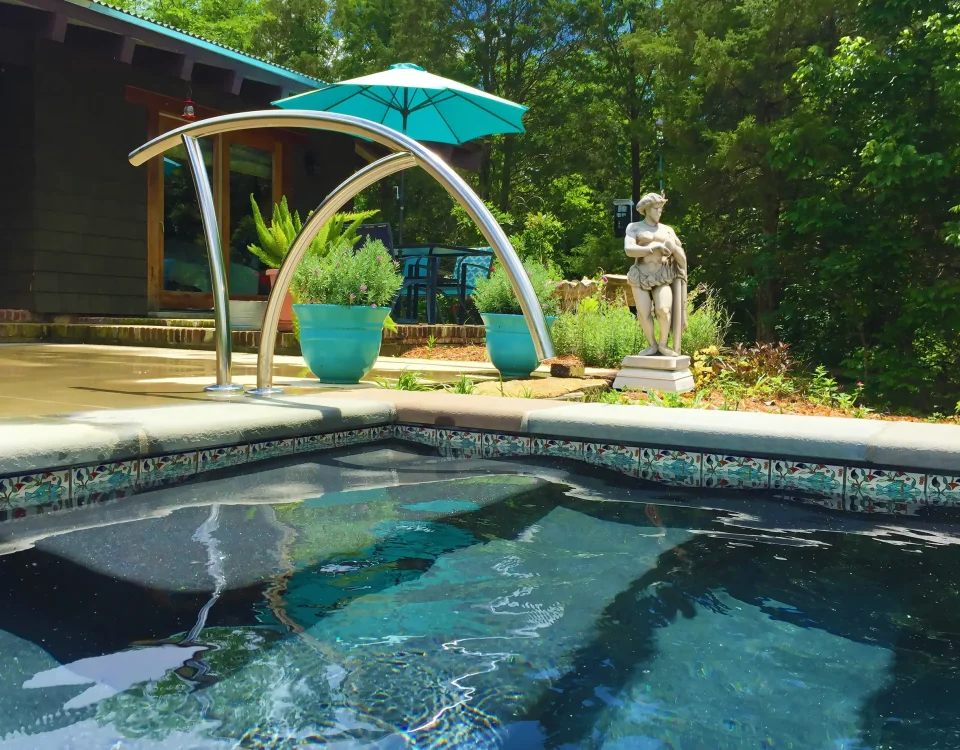
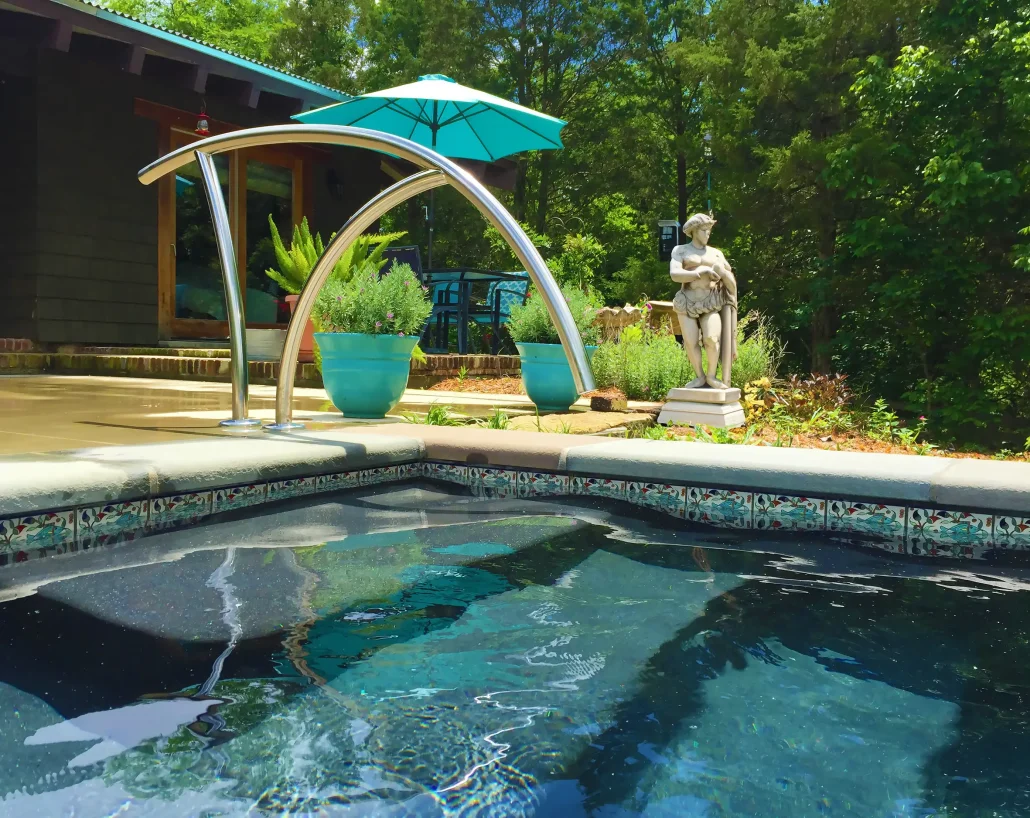
The right waterline tile can make an older pool look new without touching the shell, the deck or the equipment. This guide brings together the waterline pool tile ideas we have produced for pools across the United States, the styles US homeowners are asking for in 2026, and the practical notes on materials, cost and care you need before you order. If you already know the look you want, go straight to our hand-decorated waterline pool tiles.
Once you have chosen a waterline direction, consider how the entry will relate to it. Our guide to tile on pool steps and matching waterline details compares spotter tiles, accent layouts, risers, and trim for US pool projects.
Quick Answer: What Waterline Tiles Are and Why They Matter
Waterline pool tiles are the band of tile installed where the water meets the air, usually the top 6 to 8 inches of the pool wall. This zone collects sunscreen, body oils, minerals and debris, so the tile is more than decoration: it stops the “bathtub ring”, blocks mineral scaling and protects the plaster or pebble finish beneath it. In a 15,000-gallon backyard pool in a hot climate, a smooth porcelain band can turn weekly brushing into a five-minute job.
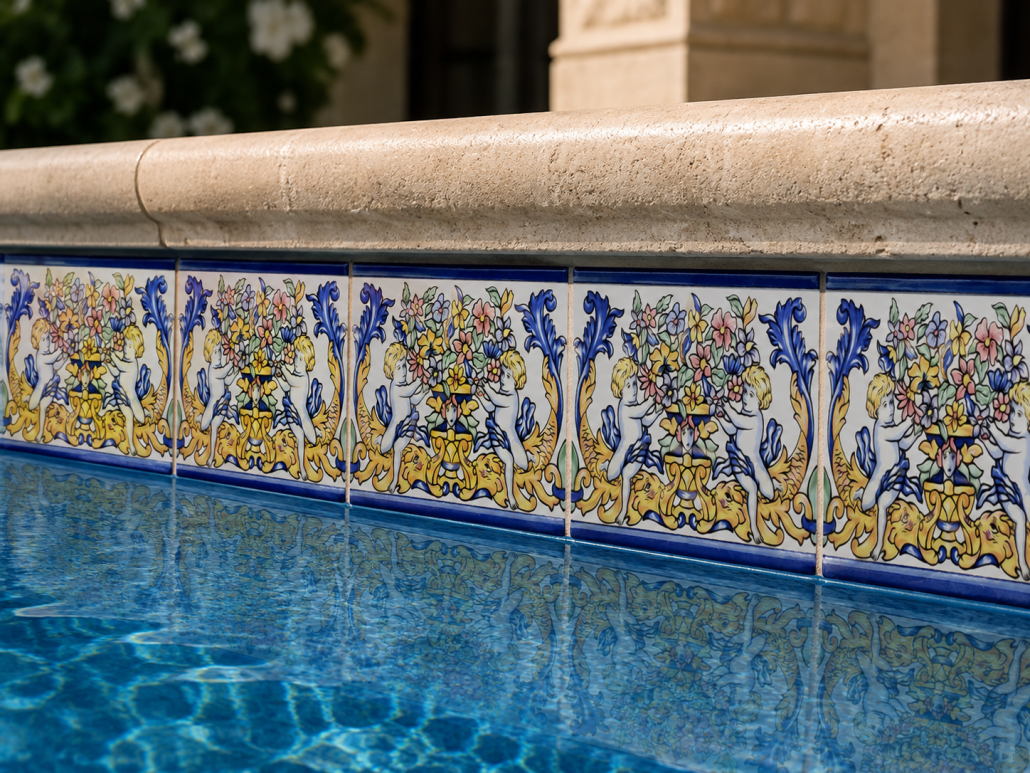
It is also the one strip of tile everybody sees, from every angle, all season long, and the smallest tiled area you will ever buy. That is exactly why the waterline is the place where a hand-painted tile becomes an easy decision rather than an extravagance. The tile you choose also sets the perceived color of the water itself: cobalt makes the water read brilliantly blue, sand and terracotta tones make it softer and more natural, greens turn it into a lagoon.
Most homeowners update the waterline during resurfacing, plaster replacement, pebble finish work or coping repairs. The main material options are porcelain, high-fired ceramic, glass and natural stone; we compare them further down.
12 Waterline Pool Tile Ideas from Real US Pools
These are twelve waterline designs we have made for pools from California to Florida, grouped by the look they create.
Floral and Garden-Inspired Waterlines
1. The Classic Floral Vine Border
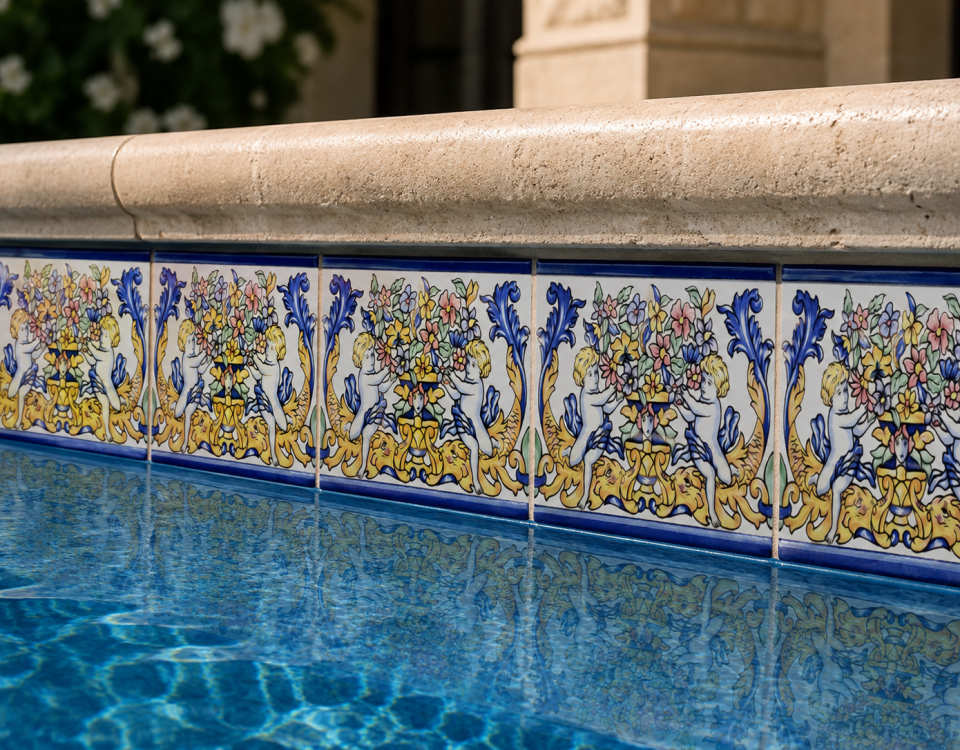
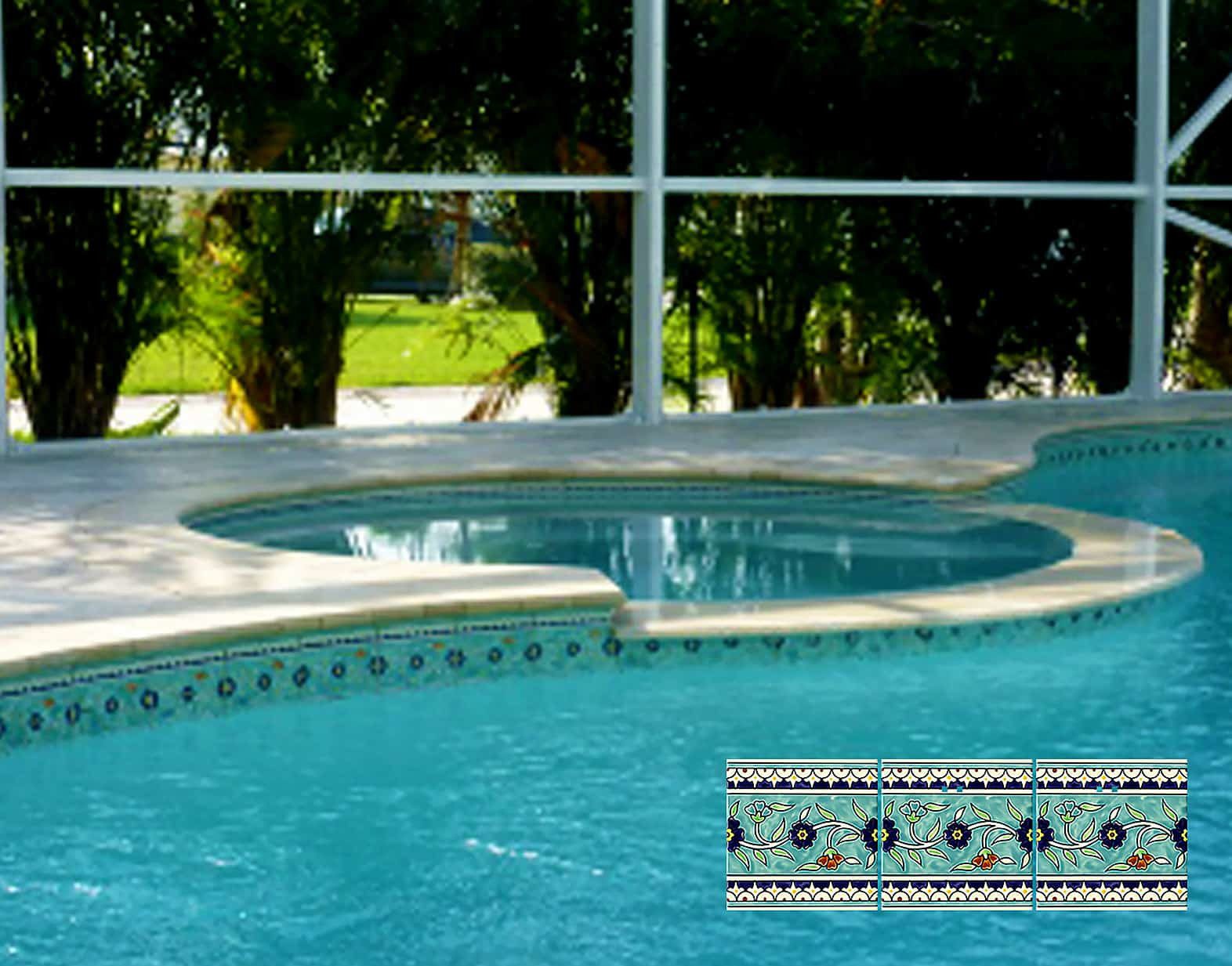
A continuous vine of tulips, carnations or pomegranate blossoms flowing around the entire waterline is the signature look of Armenian ceramics. The repeating pattern reads as rhythm rather than repetition, and the cobalt-and-turquoise palette deepens the perceived color of the water. Greens and turquoises from the same family appear in our green swimming pool tiles.
2. Garden Murals at the Waterline
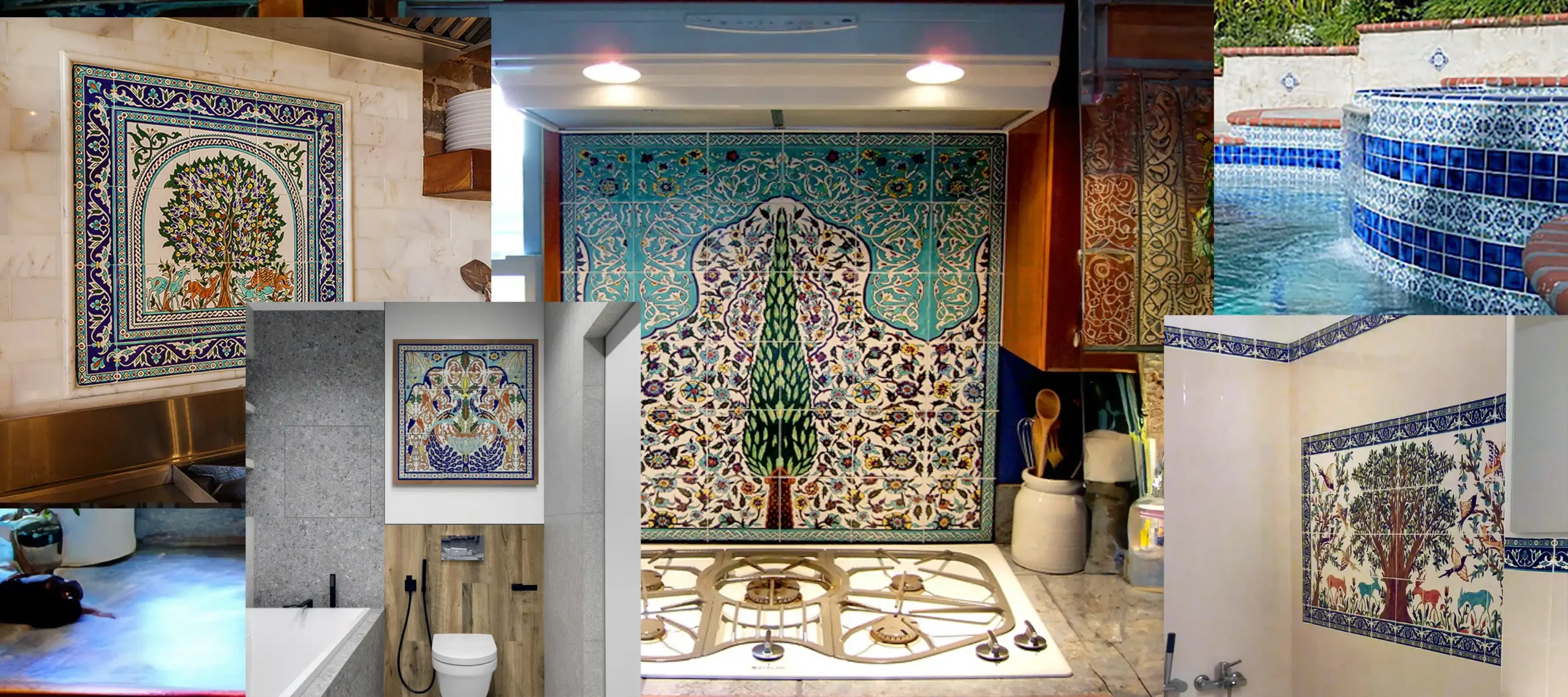
Instead of one repeating tile, a sequence of tiles can form a continuous painted scene of cypress trees, birds and gazelles among flowers that unfolds as you walk the pool deck. In the California pool below, the waterline works as a 60-foot painting.

3. The Pomegranate and Peacock Motifs
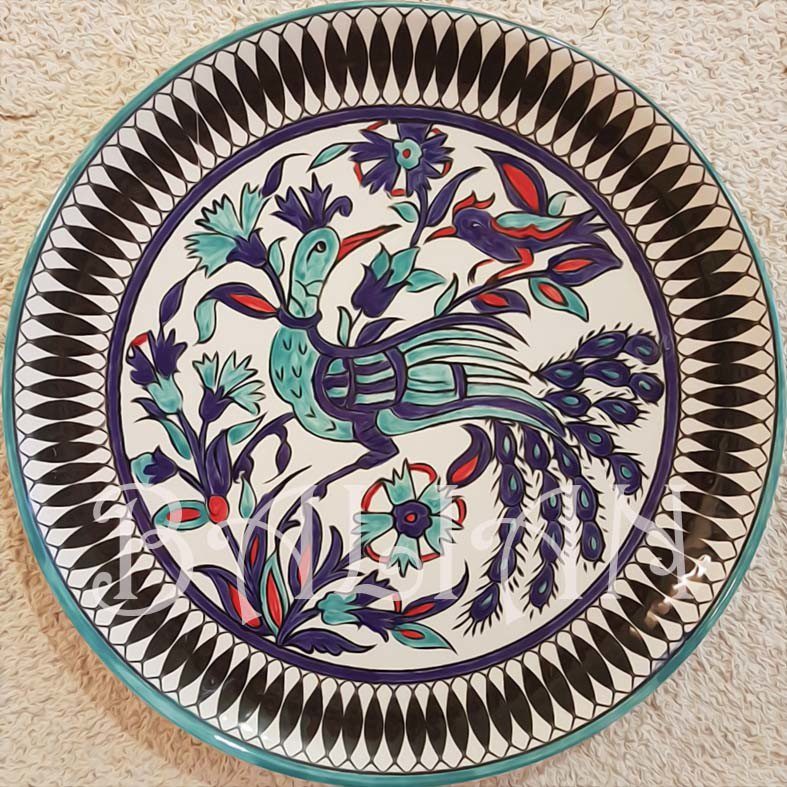
The pomegranate, an ancient symbol of abundance, is one of the most requested designs among our US clients. Its deep reds and oranges glow against blue water and pair beautifully with terracotta decks and the Mediterranean-revival architecture common in California, Texas and Florida.
Bold and Graphic Waterlines
4. Black and White Geometry
For modern homes, a crisp black-and-white geometric border gives the pool a tailored, architectural edge. Our black and white pool tiles include Greek key, checkerboard and Ottoman-inspired interlace patterns that suit both minimalist and Art Deco settings.
5. Deep Cobalt “Lori” Borders
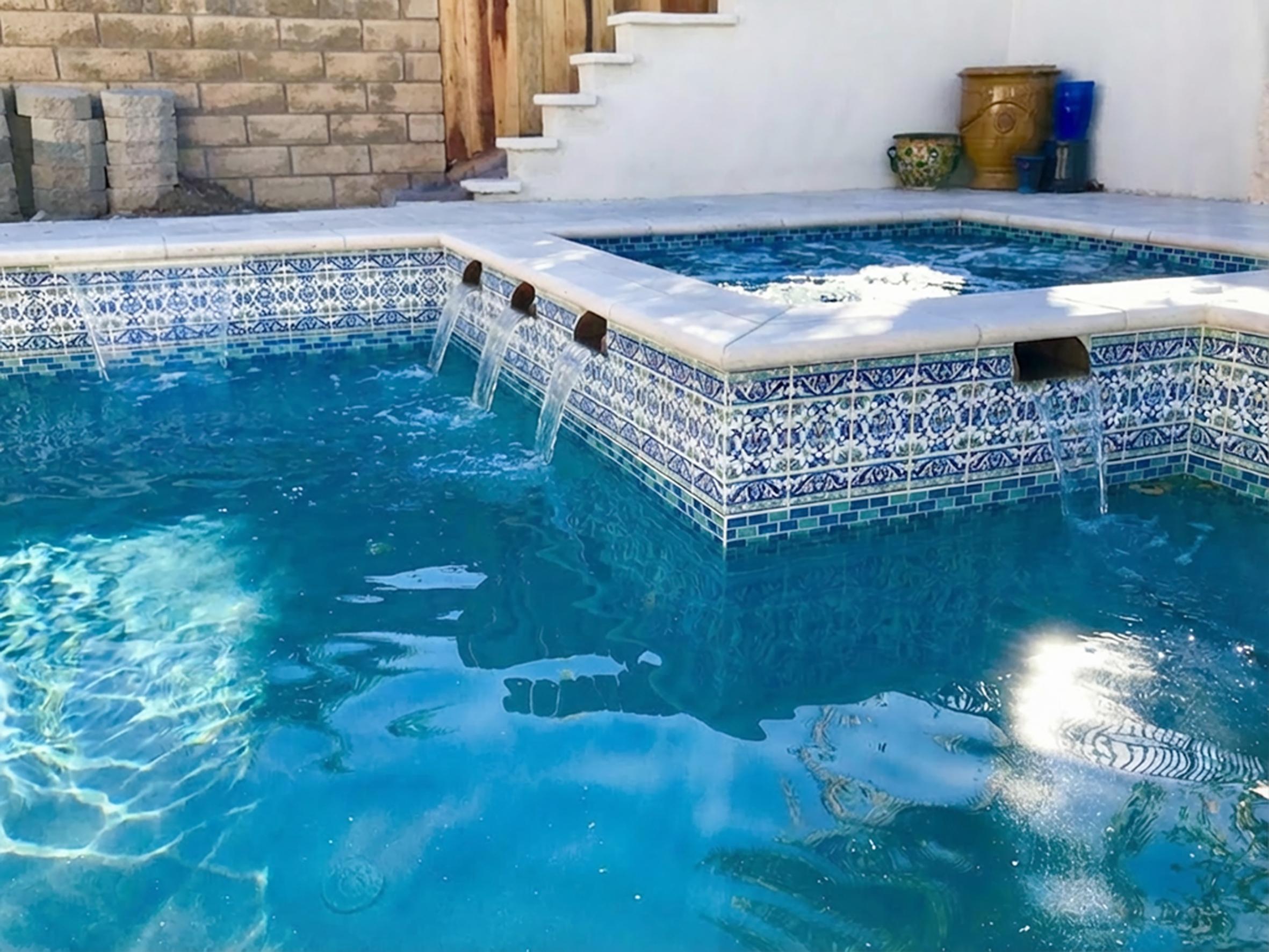
Sometimes restraint wins. The Lori pattern, a dense dark-blue scrollwork, creates a rich shadow line at the waterline that makes the water appear deeper and cooler. It is our most popular choice for desert-climate pools. See the full range of blue pool tiles in this palette, and our separate guide to blue pool waterline tile ideas.
6. High-Contrast Medallions
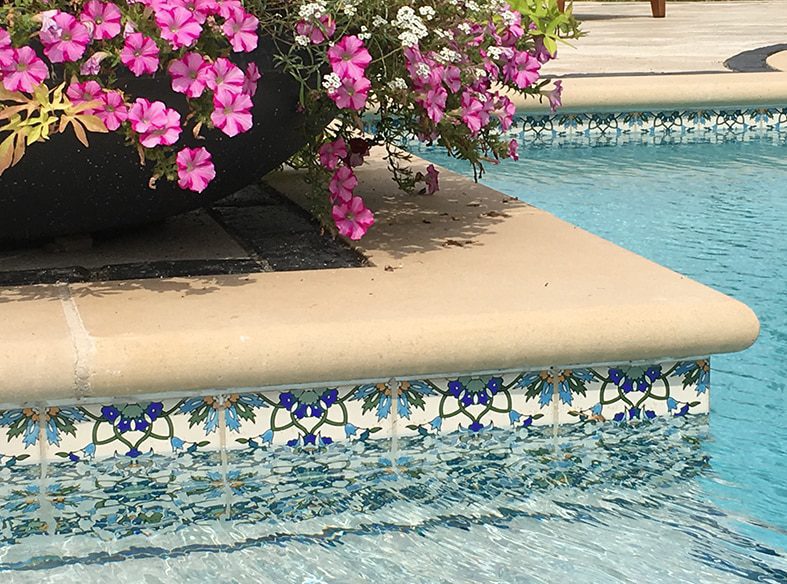
Alternating a patterned tile with a solid-color tile every second or third position creates a medallion rhythm: bolder than a continuous pattern, quieter than a mural. It is also the budget-smart way to use hand-painted tile, since half the run is plain field tile.
Material and Format Ideas
7. 6×6 Porcelain for Freeze-Thaw Climates
If your pool is in the Northeast, Midwest or mountain states, frost resistance is non-negotiable. Our 6×6 porcelain pool tiles are vitrified for near-zero water absorption, so they shrug off freeze-thaw cycles while carrying the same hand-painted artwork.
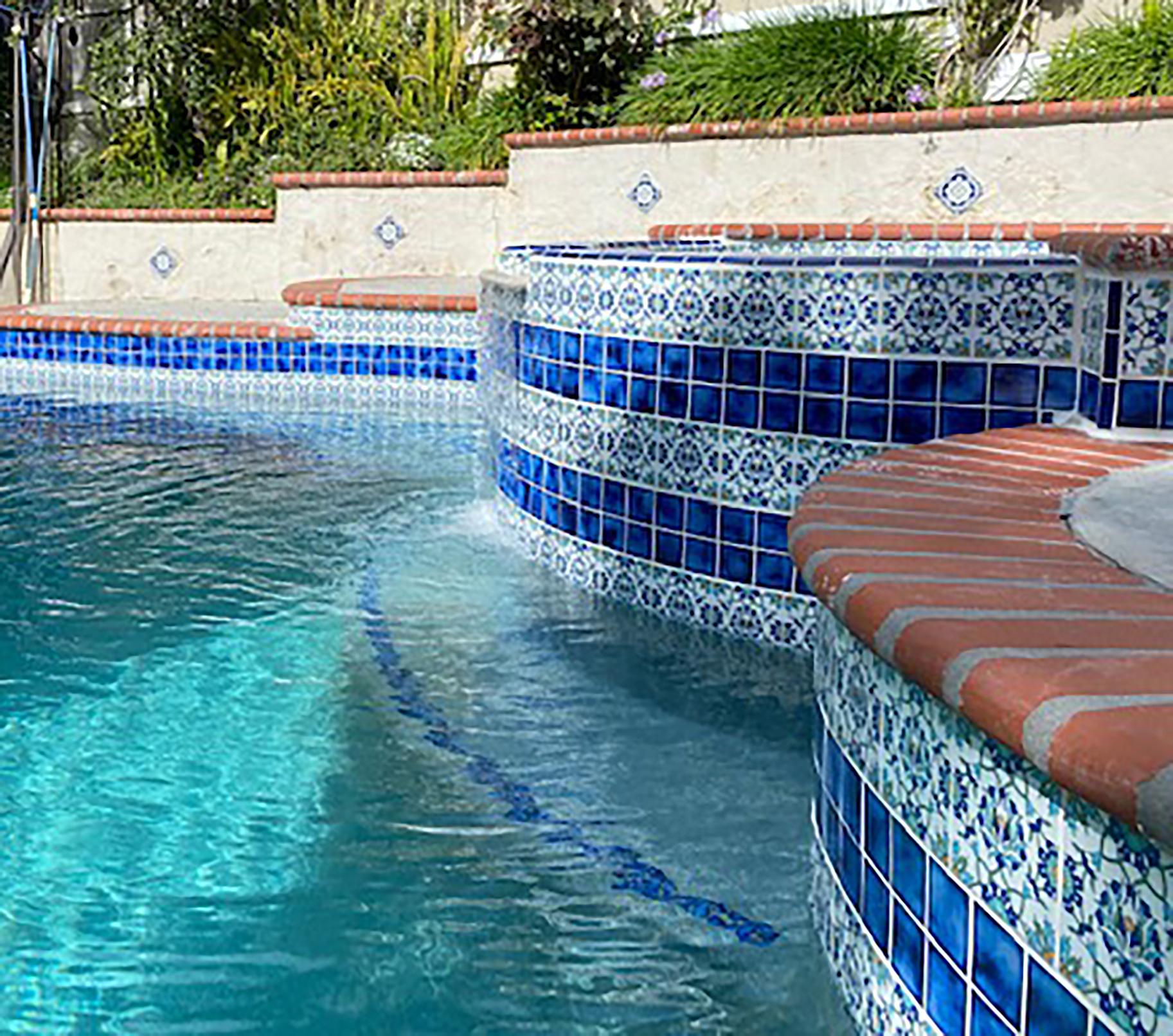
8. Carrying the Tile Up the Spa Wall
Where a raised spa spills into the pool, continuing the waterline pattern up the spa dam wall ties the two structures together. The spillway face is a small mural opportunity that most builders leave blank.
9. Matching Step Markers
Safety codes require visible step edges; nothing says they must be ugly. Coordinated hand-painted step-marker tiles turn a code requirement into a design detail.
Beyond the Waterline
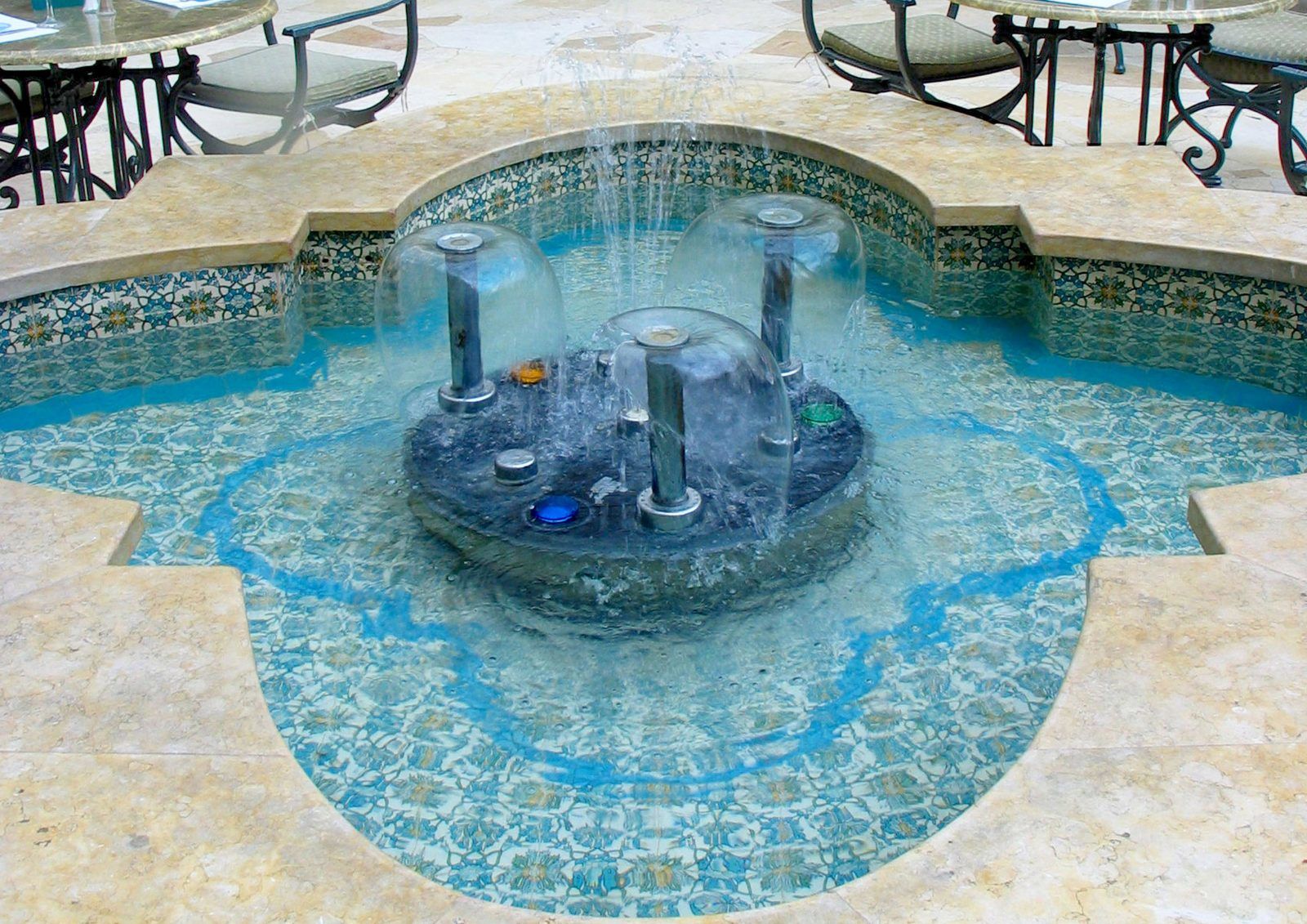
10. The Fountain or Water-Feature Surround
Pools with raised bond beams, scuppers or fountains can repeat the waterline pattern on those vertical faces, as in the hotel courtyard fountain below, tiled in the same Lori series as its adjoining pool.
11. A Feature Mural on the Pool’s Far Wall
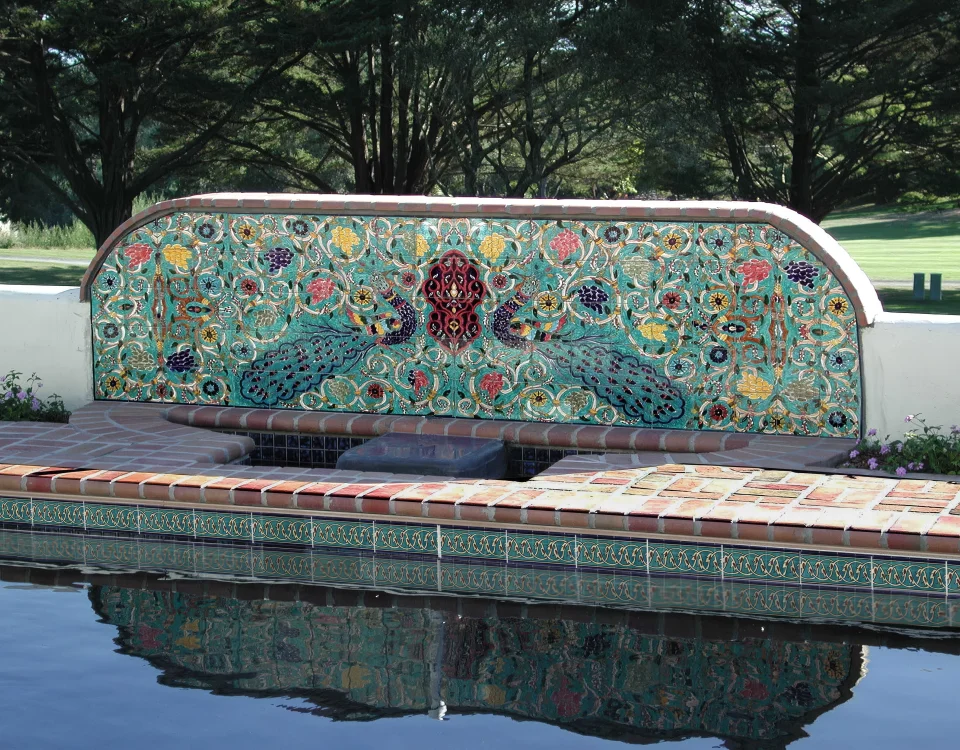
For pools with a raised back wall or a view-blocking fence, a large ceramic tile mural above the waterline becomes the focal point of the whole yard, visible from the house, the patio and the water.
12. Custom: Your Pool, Your Story
Because every Balian tile is painted by hand, the pattern can be yours alone. Clients have commissioned waterlines featuring their state flower, vineyard motifs for wine-country properties and palettes matched to interior fabrics. Explore the possibilities on our custom pool tiles page.
Modern Waterline Tile Styles for 2026
Modern pool design has moved toward sleek geometry, clean edges and curated material palettes, borrowing from contemporary architecture and boutique hotels. Think minimal grout lines, refined textures and intentional contrast: a light deck with a dark waterline, or the reverse. Four directions dominate this year.
Neutral and Matte Porcelain
Soft greys, taupes, off-whites and stone-inspired finishes that blend into decking and architecture. Matte neutrals feel calm and do not compete with landscaping or lighting. Best for minimalist pools, desert palettes and clean-lined homes. If your coping and deck are light, choose a slightly darker neutral so the pool edge stays defined.
Bold Color and Statement Tiles
Deep cobalt, emerald, dark grey or saturated blue that contrasts strongly with the water and the finish. It adds character fast, without extra decor, and glows under night lighting. If you go bold, keep the shapes simple (straight-set squares) and let the color do the work.

Stone-Look Waterlines
Slate, travertine and limestone looks bring organic texture and a designed-landscape feel, especially next to greenery and natural decking. Real stone is porous and needs sealing and re-sealing at the waterline; a porcelain tile in a stone-look finish gives the same effect with far better chemical resistance.
Mixed Materials
Matte bases with polished accents, or patterned tile paired with solid field tile, add depth without loud color. Keep the palette tight: two complementary tones are usually enough.
Waterline Ideas by Pool Type
Residential Backyard Pools
Family pools need a balance of style, safety and value. A single accent band of strong color, a rich blue or a sophisticated teal, gives a designer feel without a big budget. Coordinate it with slip-conscious finishes on steps and shallow areas, and link the color to nearby planters, pergolas or furniture so the pool feels part of the outdoor living area.
Luxury and Resort-Style Pools
Layered detailing creates a memorable experience. Patterned waterline tiles inspired by Persian or geometric motifs can wrap the pool edge while complementary tones continue into spa rims, fountains or infinity edges. Lighting matters here: patterned tile at the waterline responds beautifully to grazing light in the evening.
Indoor and Heated Pools
Indoor and heated pools rely on artificial light and higher sanitizer levels. Light to mid-tone palettes keep the room bright, gloss glazes reflect light and expand the space, and a chemically resistant porcelain body stands up to warmer water and heavier treatment.
Waterline Tile Materials: Pros and Cons
Porcelain is the best all-round material for a waterline. It is dense, frost-resistant and has water absorption below 0.5 percent, so chemicals, salt and minerals cannot penetrate it. It holds color under UV and accepts hand-painted decoration extremely well, which is why it is the base for the whole Balian collection. High-fired ceramic is the underrated option: properly glazed, pool-rated ceramic offers low porosity and excellent chemical resistance and can carry artwork no glass or stone can. Make sure any ceramic is clearly pool-rated, and avoid low-fire ceramics in cold climates or saltwater pools.
Glass gives a shimmering edge, but it is expensive, demands a highly skilled installer to avoid hollow spots, scratches more easily than people expect, and its grout lines show calcium buildup more visibly in saltwater or hard-water pools. Natural stone (slate, travertine, quartzite) is beautiful but porous: it needs sealing and re-sealing, and acidic cleaners etch it. If you love the look, a stone-look porcelain gives you the effect with none of the upkeep.
In freeze zones, impervious porcelain is the safest choice. For family pools, smooth porcelain keeps maintenance simple; for a showpiece, hand-painted tile creates something no standard material can match. For a full comparison of materials, sizes and saltwater performance, see the waterline pool tiles page and our porcelain pool tiles guide.
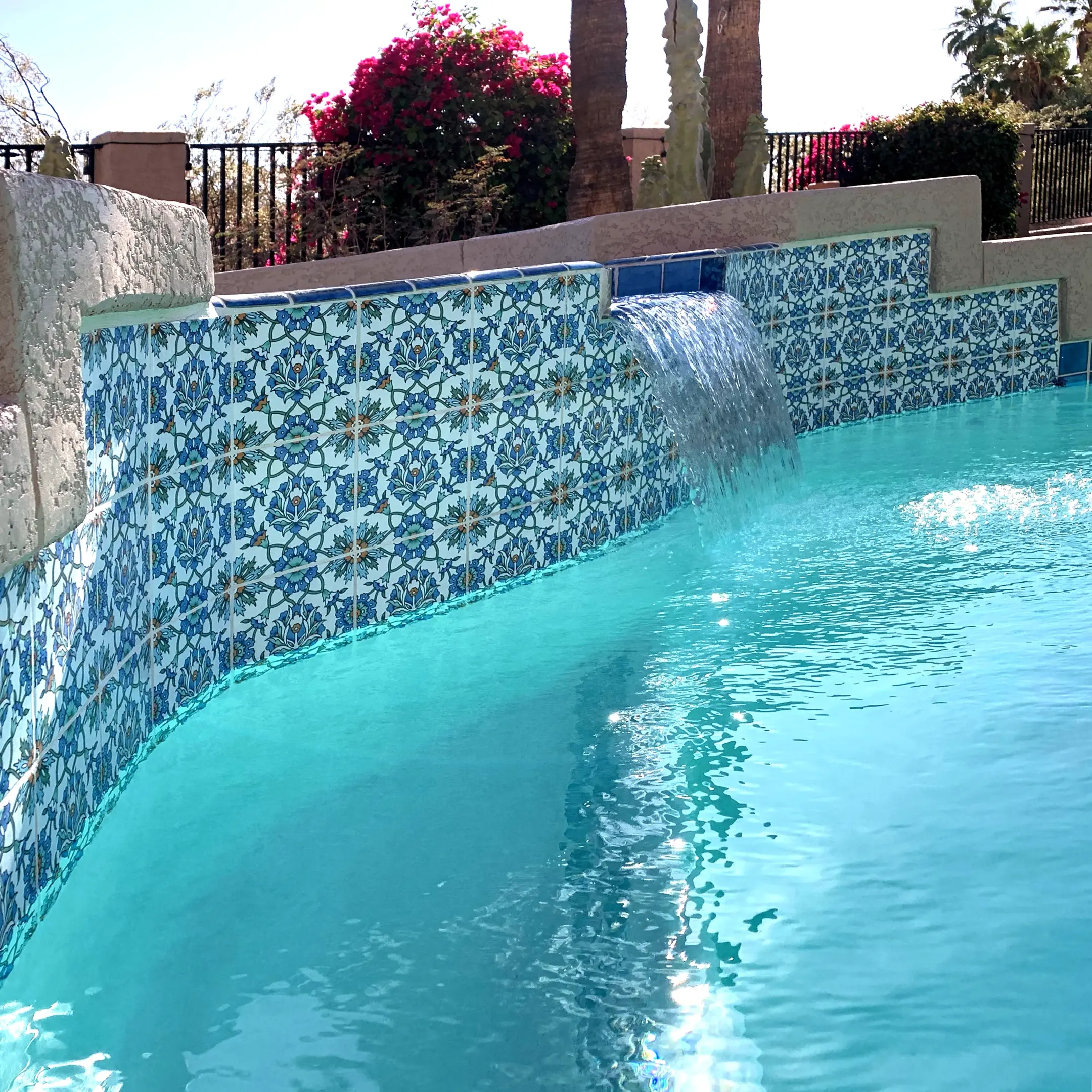
Coordinating the Waterline with Your Finish and Backyard
Waterline tile should work with the plaster or pebble color, the decking, the coping, the landscaping and even the house paint. Designers usually start with the existing finish and pick tile colors that either repeat or contrast it. Deep blue works with light grey plaster; soft neutrals suit white plaster; clay, tan and olive tones fit beige interiors and stone patios. With travertine coping, stone-look porcelain feels cohesive; with concrete or porcelain pavers, a crisp patterned band adds polish.
In shady yards, brighter colors keep the water looking alive; in full sun, muted tones reduce glare. Match the architecture too: mid-century homes like clean geometry, farmhouse yards prefer softer texture, Mediterranean houses suit clay tones. For continuity, repeat the same tile on an outdoor shower, a BBQ backsplash or the spa spillway. Always order a sample and look at it wet and dry at different times of day; our guide to the best color for pool waterline tile goes deeper on this.
Choosing: Budget, Climate and Maintenance
Typical installed ranges in the US run about $10 to $25 per square foot for ceramic, $15 to $35 for porcelain, $20 to $45 or more for glass mosaics and $25 to $55 or more for stone. Save by choosing durable porcelain over exotic glass, not by skipping pool-rated setting materials. Cold regions need frost-resistant tile with low absorption, coastal sites need materials that tolerate salt air, and high-UV regions need stable glazes. Smooth tiles brush easier, and very dark colors show calcium lines sooner than mid-tones.
Ask your installer about chemical-resistant glazes, water absorption ratings, epoxy or polymer-modified grout and expansion joints. If a supplier gives vague specs, get written confirmation before you buy. Style should never outrank performance at the waterline.
Installation and Long-Term Care
Hand-painted waterline tile installs exactly like standard 6×6 pool tile: your local pool tile contractor needs no special techniques, only pool-rated thinset and epoxy grout rated for submerged use. The usual sequence is to lower the water, remove old tile, repair the bond beam, waterproof, set the tile, grout, cure and refill. Current best practice uses polymer-modified thinset and flexible joints in high-movement areas.
Maintain the waterline with weekly brushing, balanced pH and calcium hardness, and non-abrasive cleaners for scale or sunscreen film. Avoid metal tools, pressure washers on grout joints and acidic cleaners on stone. In freezing climates, winterize carefully so moisture does not expand behind the tile. If tiles crack, sound hollow or fall off, get a professional inspection; that usually points to movement in the shell or bond beam, not just loose tile. Our step-by-step guide to cleaning waterline pool tiles covers calcium, scale and stains.
Practical Notes for US Homeowners
Lead time for a typical waterline run is several weeks, since each tile is painted to order, so the ideal moment to order is while your pool is still in the design or replaster planning stage. We ship door-to-door across the United States, fully insured, and replace any transit breakage at no cost.
Frequently Asked Questions
How many tiles do I need for my waterline?
Measure your pool’s perimeter in feet and multiply by two: that is your tile count in 6-inch tiles. A typical 16×32-foot rectangular pool has a 96-foot perimeter and needs about 192 tiles, plus 5 percent for cuts and spares.
Will hand-painted tiles fade in chlorine or salt water?
No. The pigment is fired under a transparent glaze at high temperature, making it part of the tile itself. Chlorine, salt systems and UV light do not reach the artwork.
Can I mix decorated tiles with plain ones to manage cost?
Yes. Alternating patterned tiles with solid field tile (idea 6 above) is the most popular way to get a hand-painted waterline on a tighter budget.
Which tile size is best for a waterline?
The 6×6 inch tile is the classic American format and the standard in our collection: clean grid, fewer grout lines, easy for any tile setter. Smaller pools and spas scale better with 4×4 or mosaic formats; large pools carry 6×6 or bigger comfortably.
Do modern waterline tiles work in saltwater pools?
Yes, as long as the tile is impervious-rated porcelain (absorption below 0.5 percent) and it is set with epoxy or polymer-modified grout. Standard sanded grout deteriorates quickly in a salt environment.
Bring Your Waterline to Life
Your pool’s waterline will be tiled either way; the only question is whether it becomes a maintenance strip or a signature. Browse the full waterline pool tile collection, see finished projects in our pool design gallery, or contact our studio with your pool dimensions for a quote. Every tile is painted by hand in our Jerusalem workshop, as it has been since 1922, and shipped directly to your door in the USA.