



Art Deco vs. Art Nouveau: What Is the Difference?
December 29, 2025
Black Tile Bathroom Ideas: Modern and Timeless Designs
January 20, 2026
Shower Tile Ideas & Tiled Shower Design Inspiration
A shower can be purely functional, or it can be the design feature that elevates your entire bathroom. The right shower tile ideas bring structure, warmth, and personality to the space, whether you’re working with a compact ensuite or a large primary bath. And because the shower is one of the most-used areas in a home, smart choices matter: your tiles should look beautiful, feel intentional, and perform well in wet conditions.
If you’re collecting ideas for shower upgrades, this guide is designed to make decisions easier. You’ll find practical shower tile designs, popular shower tile layout patterns, and style-led inspiration that you can adapt to your home. You’ll also learn how to balance color, scale, and finish so your shower feels cohesive.
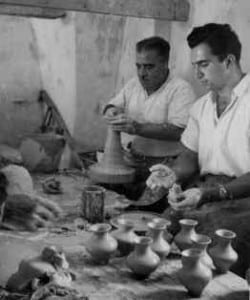
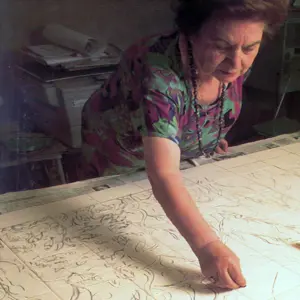
At Balian Ceramics, tile is more than a surface; it’s a craft. Our artisan-made and hand-painted pieces bring character you can’t replicate with mass-produced materials, and our custom options allow you to tailor color, pattern, and scale to your exact layout. If you’re dreaming of a shower that feels personal and timeless, the right tile choices are where it starts.
Quick Shower Tile Ideas by Style
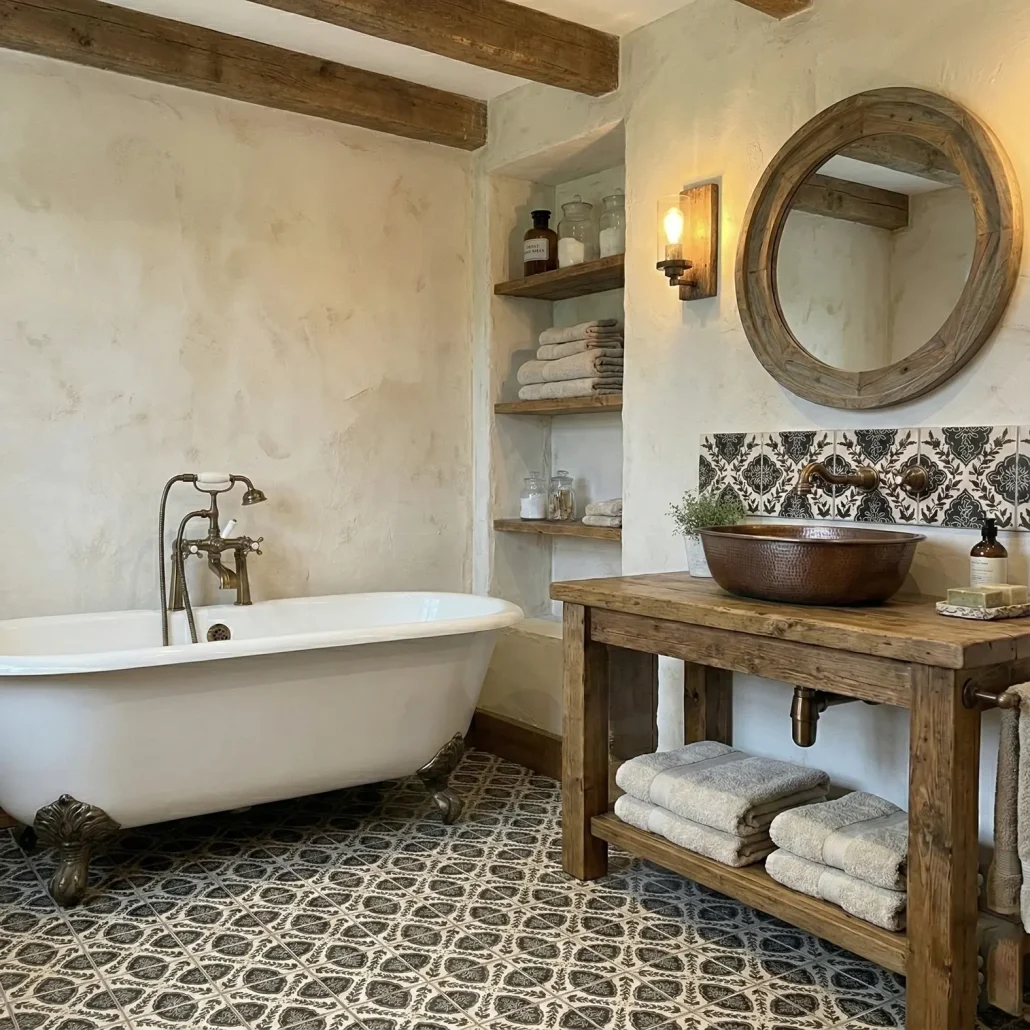
Below are four approachable style directions with tiled shower design ideas you can use as a starting point. Each style includes layout guidance and a few design rules to keep your shower looking intentional, no matter the size of the room.
Classic & Timeless
Classic doesn’t mean boring. It means your shower looks just as good five years from now as it does today, and it pairs easily with evolving decor.
- Subway Tile Layouts that Feel Tailored: Subway tile remains one of the most reliable shower tile layout patterns because it works with almost any bathroom style. The secret is choosing a layout that complements the proportions of your shower:
- Offset (Running Bond): The familiar brick pattern. Great for traditional spaces and for softening hard edges.
- Stacked (Grid): Clean and modern, with crisp lines that make small showers feel organized.
- Vertical Stack: Visually lifts the ceiling height, especially effective in compact bathrooms.
- Neutral Handmade-Look Tiles for Warmth: A true timeless shower often relies on soft neutrals: warm white, ivory, sand, misty gray, and muted stone tones. Handmade-look surfaces add subtle variation and depth, which prevents an all-neutral shower from feeling flat. If you love texture, consider a glossy finish on the walls and a matte finish on supporting elements (like shelves or trims) for contrast.
- Simple Borders that Frame Niches and Corners: A shower niche is practical, but it can also be a design detail. A narrow border, either a pencil trim, a thin patterned strip, or a tonal accent, helps define the niche so it looks intentional. This is one of the easiest ideas for shower upgrades that feels custom without increasing complexity.
Design Tip: Keep the main wall tile calm, then add detail in small, controlled doses, like a niche back panel or a border line that runs through the shower at eye level.
Mediterranean & Old-World
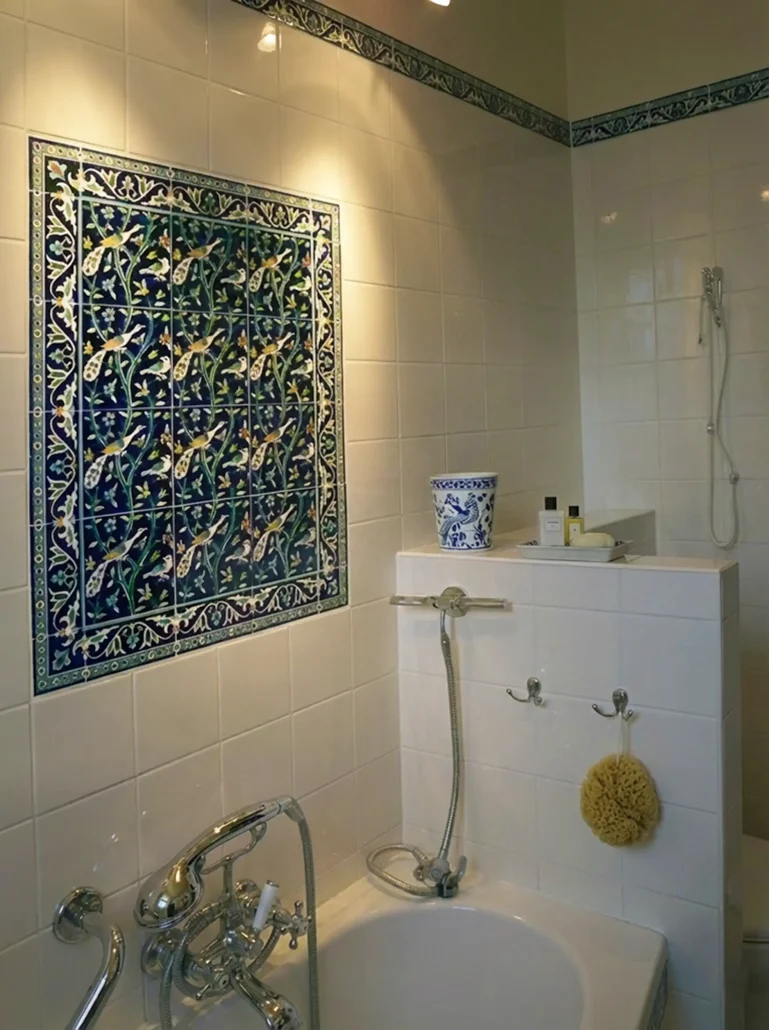
If you want your bathroom to feel collected, storied, and warm, Mediterranean-inspired shower tile ideas are a natural fit. This style is especially popular for homes that lean Spanish, coastal, eclectic, or traditional.
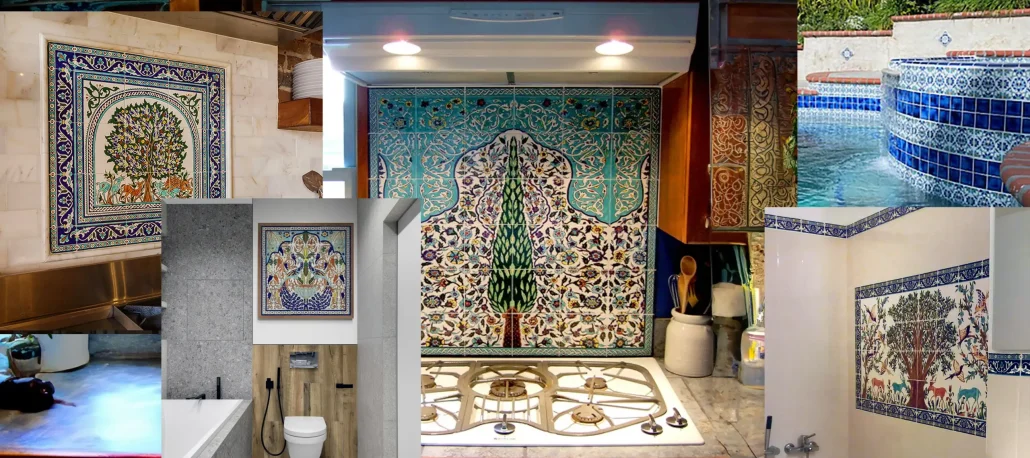
- Hand-Painted Accents that Create Focal Points: Old-World style shines when the artistry is concentrated in specific areas. A hand-painted feature can live in:
- The niche back
- A vertical panel behind the shower fixtures
- A border that wraps the shower perimeter
- Patterned Feature Strips for Rhythm and Balance: A patterned strip, running horizontally or vertically, adds movement while keeping the primary wall tile simple. Try pairing a neutral field tile with a patterned band at mid-height or around the niche. It’s one of the most flexible shower tile designs because it scales well for both small and large bathrooms.
- Warm, Heritage Palettes: Think terracotta, olive, indigo, sun-washed cream, and soft clay tones. Even in a modern home, these colors can feel grounded and sophisticated when balanced with clean fixtures and simple lighting.
Design Tip: Choose one dominant pattern and repeat it in two places only (for example, a niche and a thin border). Repetition makes the design feel intentional and high-end.

Modern & Minimal
Minimal showers are about restraint: fewer materials, fewer lines, and a clearer sense of space. The goal is calm, not clinical.
- A Large-Format Look (Clean Lines, Fewer Grout Joints): Even if you’re not using true large-format tiles, you can create a similar effect by selecting elongated shapes or layouts that reduce visual breaks. Stacked layouts and larger tile sizes help walls feel smoother and more expansive, especially in smaller showers where too many grout lines can look busy.
- Matte Textures for a Soft, Contemporary Finish: Matte surfaces tend to read as modern and refined. They also pair beautifully with black hardware, brushed nickel, or warm brass. If you want the shower to feel spa-like, keep the palette simple: one main wall tile, one floor tile, and one accent maximum.
- One Statement Wall Only: Modern minimal design works best when the statement is concentrated. Consider a single wall in a subtle pattern, a tonal mural effect, or a slightly deeper color while the surrounding walls stay quiet.
Design Tip: In minimal bathrooms, lighting becomes part of the tile design. Under-niche LEDs or a soft overhead glow can highlight texture and craftsmanship without adding additional materials.
Bold & Artistic Statement
If your bathroom is where you want personality, this is the style direction to explore. Bold showers can still be timeless when they’re well-composed and thoughtfully scaled.
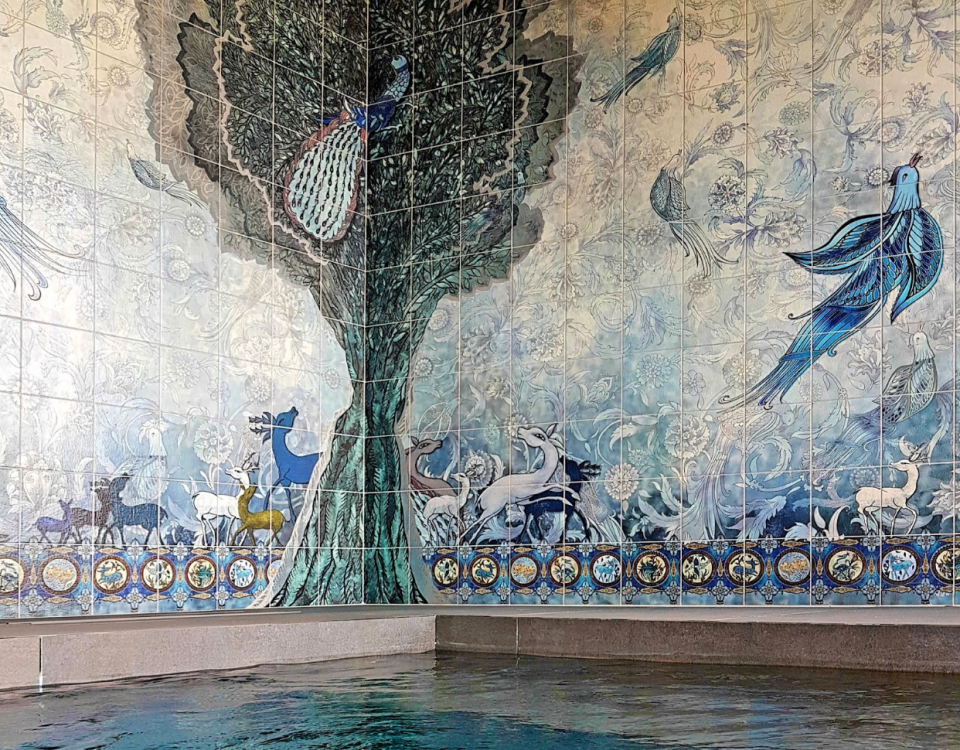
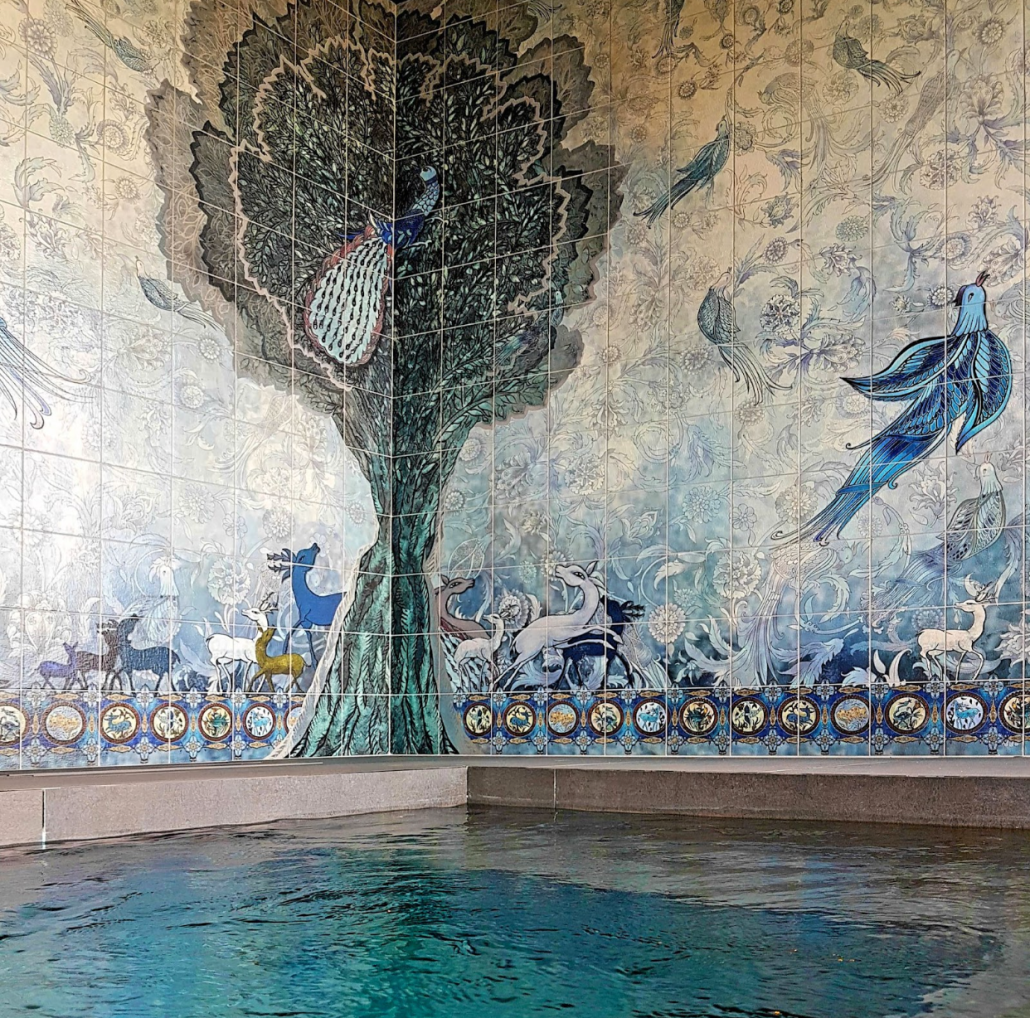
- Mural-Inspired Shower Wall: Tile murals effect turns the shower into an art piece. You can go fully immersive (one entire wall) or more controlled (a panel that sits behind the shower fixtures). For artistic tiles, the key is planning the composition so it aligns with niche placement, valve height, and sightlines as you enter the room.
- Color-Blocking for Modern Drama: Color-blocking can be as simple as dividing the shower into two zones:
- A deeper tone on the lower half for grounding
- A lighter tone above to keep the shower open and bright
This is one of the most practical tiled shower design ideas because it can visually correct awkward proportions like a very tall shower or a narrow footprint.
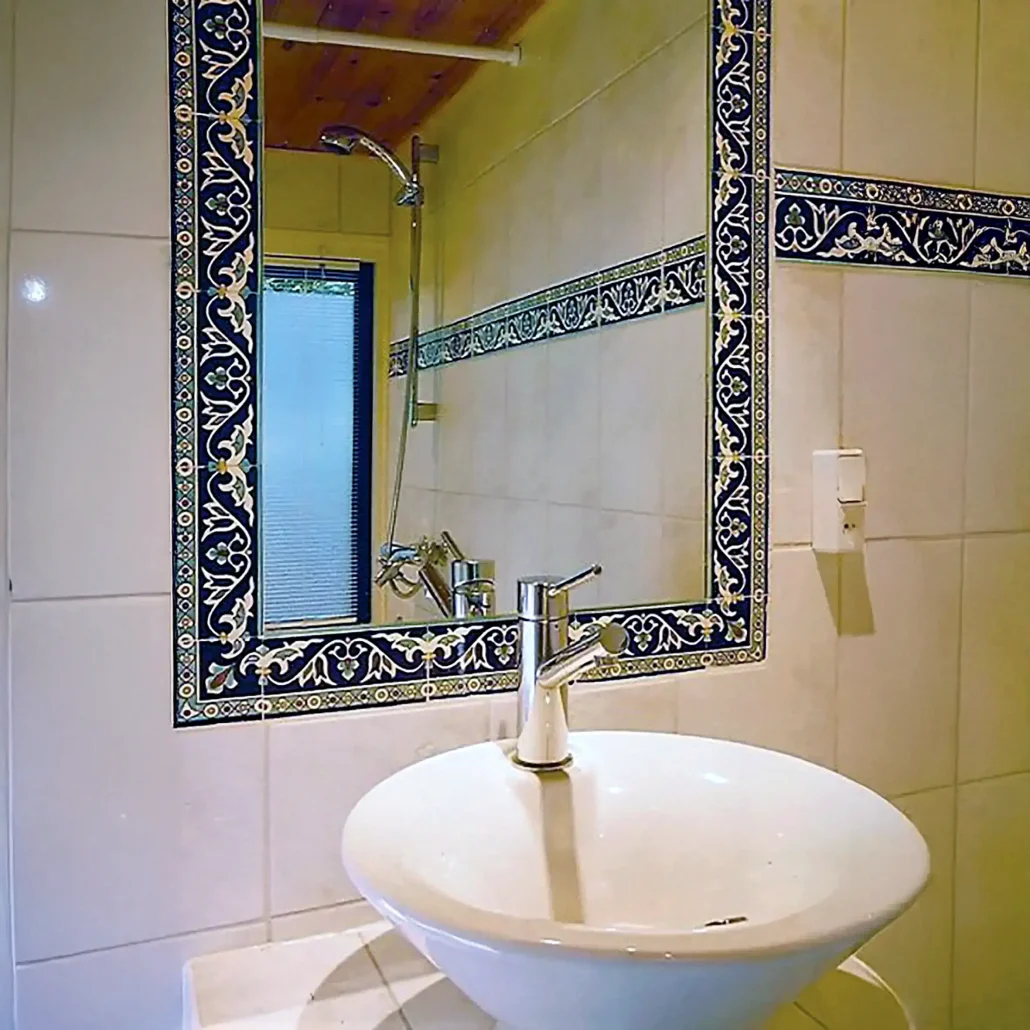
- Decorative Borders Around Focal Areas: Borders can frame a niche, outline a feature panel, or wrap the shower like a band. Think of borders as architectural lines: they guide the eye and bring structure to bold color or pattern.
Design Tip: Bold doesn’t mean everywhere. Choose one hero element (a mural wall, a strong pattern, or a saturated color) and let everything else support it.

Frequently Asked Questions (FAQ)
- What is the best shower tile layout pattern for small bathrooms?
For small bathrooms, vertical stacked layouts and clean grid patterns are often the most flattering because they create order and can make the space feel taller. If you love subway tile, a vertical stack is a strong choice for compact showers. - Should the shower floor tile be different from the wall tile?
Often, yes. Shower floors typically need smaller tiles or mosaics for better grip and easier slope-to-drain installation. You can still coordinate the look by matching tones, finishes, or accent colors. - How do I choose grout color for shower tiles?
Use grout to control contrast. Matching grout creates a seamless look (great for modern minimal showers), while contrasting grout emphasizes shape and pattern (great for classic subway layouts). In most showers, mid-tone grout is a practical balance for maintenance and style. - Can I mix patterned tiles with plain tiles?
Absolutely, and it’s one of the best ways to use a pattern without overwhelming the space. Keep the patterned tile to one zone (niche, feature strip, or one wall) and use a calm field tile everywhere else. - Are handmade tiles okay for wet areas like showers?
Yes, when they’re properly installed and appropriate for wet environments. The key is professional installation, correct waterproofing, and using suitable materials for the specific application (especially on floors). Handmade and artisan-made tiles are commonly used in showers when installed correctly. - What tile size is best for a shower niche?
Smaller formats or cut-to-fit pieces usually work best because niches have multiple planes and edges. Mosaic, patterned accents, or smaller rectangular tiles make it easier to align grout lines and keep the niche looking polished. - How do I design a feature wall in a shower?
Start by choosing the wall you naturally see first, often the wall opposite the entry. Then select one hero element (pattern, mural, or color) and keep everything else minimal. Make sure the feature aligns with niches and fixtures so the design looks integrated, not interrupted.