






Tiles as Art
April 8, 2026
The 2026 Guide to Fireplace Tiles: Elevating Your Home with Hand-Painted Artisan Ceramics
May 3, 2026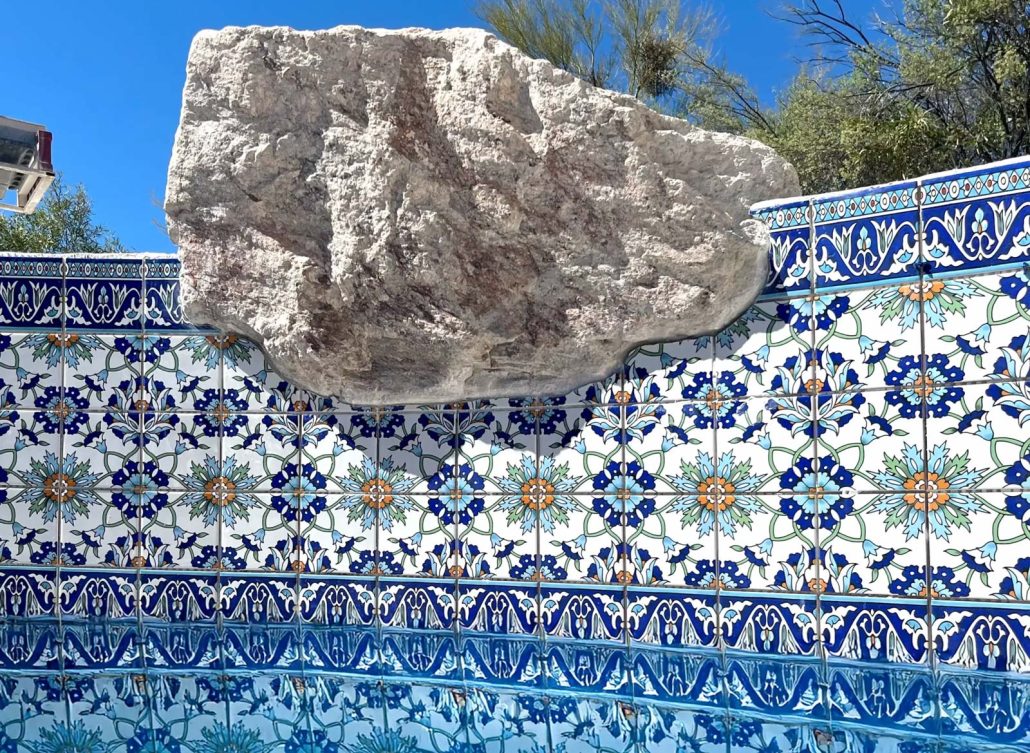
Waterline Pool Tiles: The Ultimate Guide to Choosing the Best Tile for Your Pool
By Balian Ceramics | Updated: April 2026 | Reading time: ~9 min | www.armenianceramics.com
The band of tile at your pool’s waterline does more than protect the shell — it sets the entire visual character of your backyard. Whether you’re building a new inground pool or renovating an existing one, choosing the right waterline pool tiles is the single design decision that will define how your water looks, how your outdoor space feels, and how long your pool stays beautiful. This guide walks you through everything US homeowners need to know — from materials and colors to sizing, installation, and cost.
What Are Waterline Pool Tiles?
Waterline pool tiles are the row (or rows) of tile installed at the water’s surface level along the interior wall of a swimming pool. This six-inch band of tile sits right where water meets air — the most chemically active and visually prominent zone of any pool.
The waterline is where body oils, sunscreen, mineral deposits, and calcium accumulate. Without a non-porous tile surface at this level, those contaminants absorb into raw plaster or gunite, permanently staining the pool shell and accelerating structural breakdown. The tile acts as a protective barrier that can be cleaned easily, keeping the pool looking sharp and structurally sound for decades.
Because they sit directly at eye level when a swimmer is in the water — and are highly visible from the pool deck — waterline pool tiles are also the most impactful decorative element in any pool design. A well-chosen tile can make an ordinary backyard pool look like a luxury resort retreat.
Why Waterline Tiles Matter More Than You Think
They control the color of your water
This surprises most homeowners: the waterline pool tile you choose directly influences the perceived color of your pool water. Light refracts at the tile surface and enters the water, pulling the water’s apparent color toward the tile’s hue. Install a deep cobalt blue tile and the water looks classically, brilliantly blue. Choose a warm sand or terra-cotta tile and the water takes on a softer, more natural cenote quality. Select a green or olive tile and the water feels like a tropical lagoon.
Your pool plaster color matters — but the pool waterline tile is what sets the baseline color the eye registers first. Design professionals have understood this for years. Most homeowners discover it only after installation, when it’s expensive to change.
Design tip: Always request a large physical sample of your waterline pool tile (at least 6 inches square) and hold it at the edge of a body of blue water before committing. The effect in person can differ dramatically from a catalog photo.

A sample 6×6 inch waterline pool tile
They protect your pool structure
In cold-climate US states — from the Midwest to the Northeast to the Mountain West — pools are vulnerable to freeze-thaw damage. When water in a porous plaster surface freezes, it expands and cracks the shell. Waterline tiles with a vitrified, non-porous glaze prevent water absorption at the most vulnerable level. They also block the oil and mineral buildup that degrades plaster and gunite over time, significantly extending the life of the pool structure.
They define your backyard aesthetic
The pool deck, coping, and landscaping all matter — but design professionals consistently point to the pool waterline tile as the single element that most determines whether a pool looks custom or generic. A bold geometric pattern, a hand-painted Mediterranean motif, or a shimmering mosaic pool tile band elevates the entire outdoor living space in a way that no other single material can achieve.
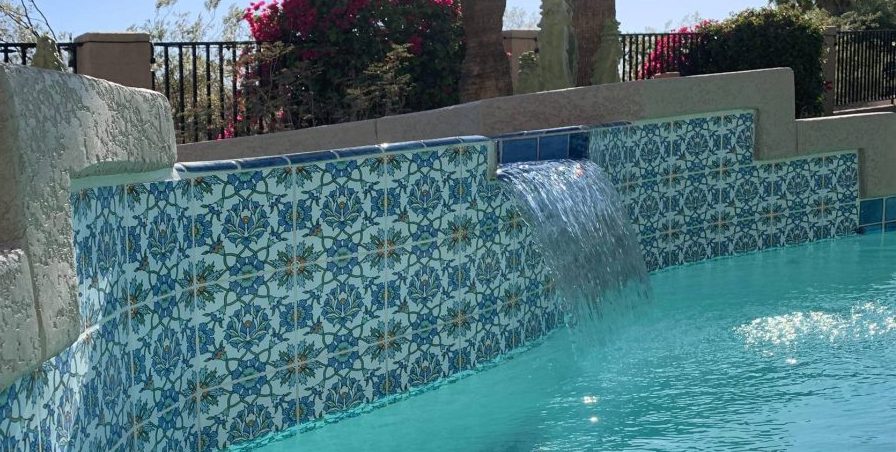
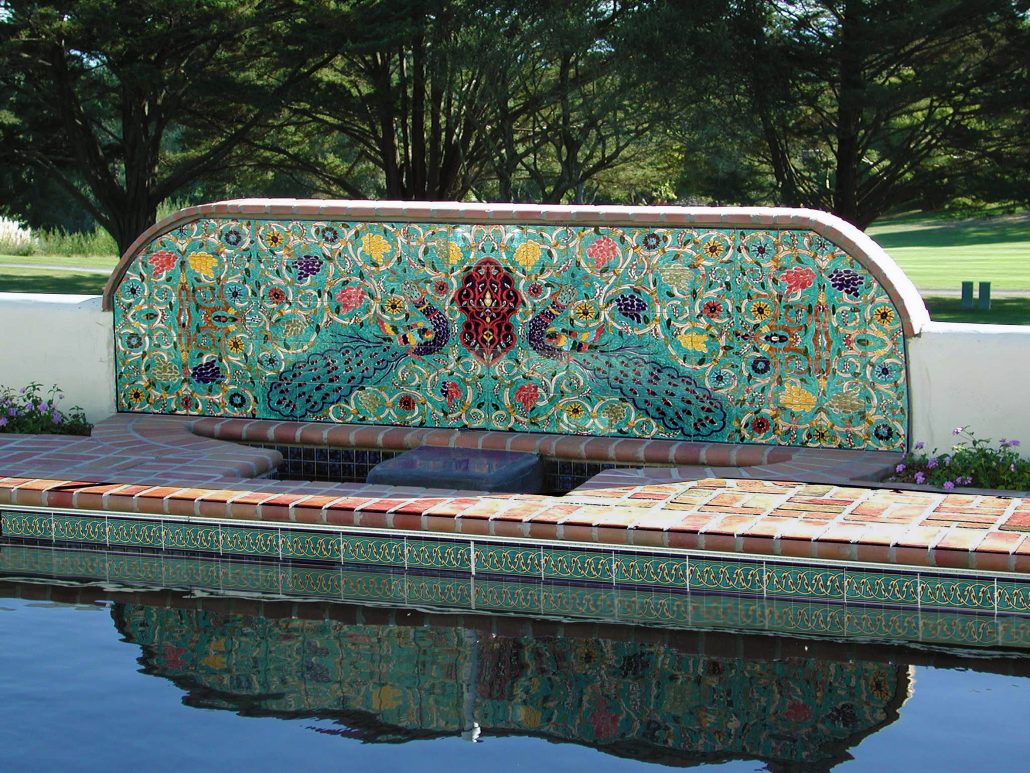
An Installation of our porcelain pool tiles in California USA
Waterline Pool Tile Materials Compared
Choosing the right waterline pool tile starts with understanding the four main material categories, each with distinct strengths and trade-offs for swimming pool tile applications.
| Material | Durability | Best for | Avg. cost / sq ft | Notes |
| Porcelain | Excellent | All pool types; modern and decorative aesthetics | $10 – $50 | Densest ceramic-family material; extremely low water absorption; accepts decorative surface coatings exceptionally well |
| Standard ceramic | Very good | Decorative waterline on a controlled budget | $3 – $30 | Widest range of surface designs; proven track record; slightly higher porosity than porcelain |
| Glass | Very good | Saltwater pools; luxury designs | $15 – $100+ | Stunning light reflection; fully non-porous; premium pricing; limited decorative pattern range vs porcelain |
| Natural stone | Variable | Resort-style organic aesthetics | $10 – $60 | Requires sealing; some types vulnerable to pool chemicals; high maintenance over time |
Key takeaway: Porcelain is the top-performing material for waterline pool tiles across all categories — durability, chemical resistance, freeze-thaw resilience, and decorative versatility. It is the material of choice for serious pool builders and discerning homeowners across the USA.
Why Porcelain Is the Best Waterline Pool Tile Material
The densest, least porous option available
Porcelain is fired at higher temperatures and under greater pressure than standard ceramic, producing a body that is denser, harder, and far less porous. For waterline pool tile applications, this matters enormously. Pool water — whether chlorinated or salt-treated — is constantly pressing against the tile surface and working into any available void. Porcelain’s near-zero water absorption rate (typically below 0.5%, qualifying it as impervious under the ANSI A137.1 standard) makes it the most structurally sound choice for a long-term pool waterline installation.
Superior freeze-thaw resistance
For homeowners across the northern United States, freeze-thaw resistance is non-negotiable when choosing waterline pool tiles for inground pools. Because porcelain absorbs almost no water, there is nothing to freeze inside the tile body, nothing to expand, and therefore nothing to crack or shear away from the pool wall. This makes glazed porcelain one of the most reliable inground pool waterline tile options in cold-climate US states.
Chemical resistance across all pool types
Pool water chemistry is demanding. Chlorine, bromine, pH adjusters, salt, and algaecides cycle through the water continuously. A high-density porcelain body with a vitrified glaze is inert to all of these chemicals. The glaze surface will not fade, pit, discolor, or degrade over years of direct chemical exposure. This is why porcelain consistently outperforms natural stone and lower-density ceramic in long-term pool waterline tile applications.
An exceptional base for decorative surface treatments
Because porcelain has such a stable, consistent body, it accepts decorative surface coatings and hand-applied glazes far more uniformly than softer tile bodies. This is what allows manufacturers to achieve intricate patterns, vivid colors, and specialty finishes on a porcelain base that will stay true for the full life of the installation.
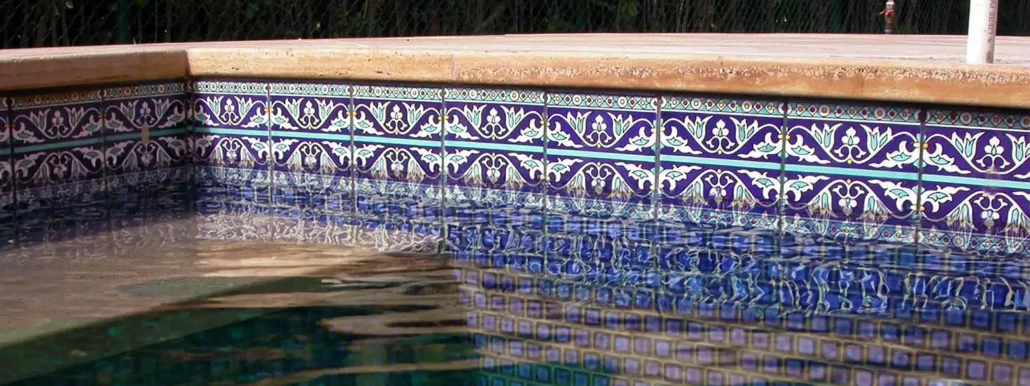
A pool tile idea inspired by a discerning client in Hawaii using our porcelain tiles
The Balian Ceramics Approach: Porcelain with a Transparent Protective Glaze
Two layers of protection, one tile
Balian Ceramics produces its waterline pool tile collection on a high-fired porcelain base — then applies a second, additional coating of transparent glaze over the decorative surface before a final firing. This double-glaze process creates a tile that combines the structural advantages of dense porcelain with an extra sealed surface layer that further reduces porosity, enhances chemical resistance, and dramatically increases the tile’s ability to shed the oils, minerals, and calcium deposits that accumulate at every pool’s waterline.
The result is a pool waterline tile that is easier to clean, longer-lasting, and more visually stable than single-glaze alternatives. The transparent topcoat also magnifies the depth and luminosity of the decorative pattern beneath it, giving Balian Ceramics tiles a richness of color that is visible from across the pool deck.
Why the extra glaze coat matters at the waterline
The waterline is the single most demanding location on any pool surface. It is the zone of constant evaporation and re-wetting, chemical concentration, UV exposure, and physical contact. Applying a transparent protective glaze over the decorative layer acts as a sacrificial surface — one that absorbs the wear of the waterline environment while leaving the pattern and color beneath it fully intact. For homeowners investing in decorative pool border tile ideas that they expect to enjoy for twenty or thirty years, this additional protection is not a luxury detail. It is a meaningful engineering choice.
Designs rooted in centuries of tilework tradition
Balian Ceramics draws its decorative vocabulary from one of the world’s oldest and most sophisticated tilework traditions — geometric and floral motifs refined across generations of artisan families, applied now to a porcelain body engineered for the demands of American pools. The collection includes Mediterranean style pool tiles, arabesque patterns, hand-inspired geometric designs, and classic solid-color pool waterline tiles in the most sought-after blue, cobalt, sand, and earth tones for the US market.
Custom tip: Balian Ceramics offers custom colorways for larger residential and commercial pool projects, and works directly with pool designers, landscape architects, and pool contractors across the USA to specify the right tile for any project scope and budget.
Choosing the Right Color and Pattern for Your Waterline Pool Tile
Classic blues and cobalts
Deep cobalt blue and sky blue remain the most popular blue pool tile choices in the United States for good reason. They create crisp, visually inviting water that looks exactly how most people picture a swimming pool. Blue waterline tiles also pair with virtually every coping and deck material, making them the safest starting point for any pool design.

Cobalt Blue Lori Series 6×6 inch
Earthy neutrals and Mediterranean tones
Warm sand, terracotta, cream, and sage green tones are gaining significant popularity in 2026 as US homeowners move away from the predictable all-blue pool aesthetic. These colors create water that appears more natural — more like a cenote or a clear tropical shoreline. They pair especially well with travertine and limestone coping and with warm-toned plaster finishes. Mediterranean style pool tiles in these tones are among the most requested designs in the Balian Ceramics collection. Explore our Mediterranean pool tiles to see the hand-painted look in durable porcelain.

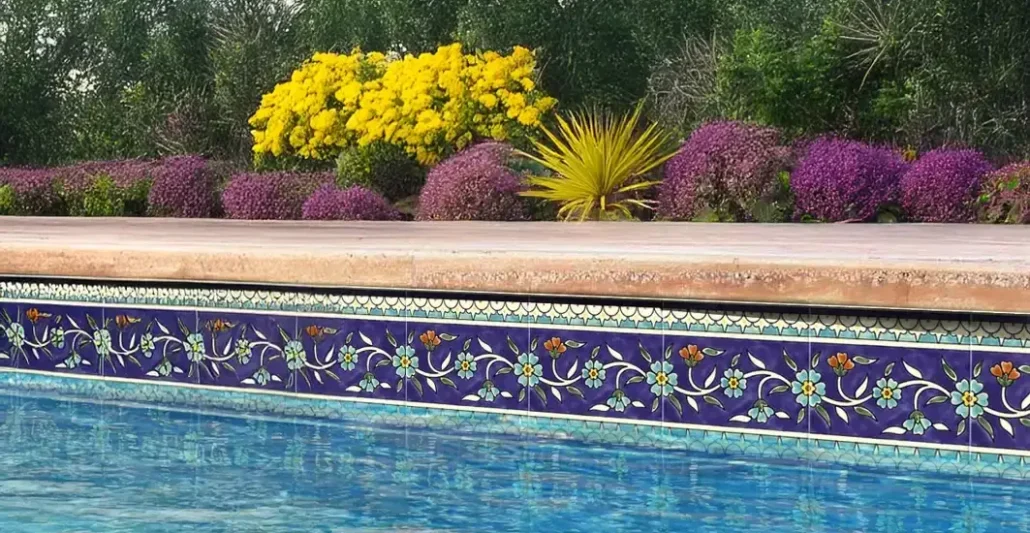
A floral 6×6 inch with earthy browns and blues
Bold geometric and decorative patterns
For homeowners who want their pool to make a true design statement, pool tiles with geometric tile patterns are transformative. A band of intricate pattern running around the full waterline turns the pool into a work of art. Decorative pool border tile ideas rooted in geometric tilework traditions — arabesque, star-and-cross, interlocking hexagon — have a sophistication that solid-color tiles simply cannot match, and they look equally impressive in modern and traditional pool designs.

Handmade 6×6 inch porcelain tile with a geometric pattern
Matching your outdoor palette
The most cohesive pool designs treat the pool waterline tile as a tonal link between the pool plaster and the surrounding deck. If your coping is warm travertine, lean toward cream, sand, or amber tile tones. If your deck is cool grey or bluestone, crisp white, cobalt, or charcoal waterline tiles will feel intentional and unified. The goal is for the water, the tile, and the hardscape to share the same color temperature — either all warm or all cool — to create a seamless outdoor living space.
Waterline Pool Tile Sizes: What Works Best
4×4 and 6×6 inch tiles — the classic format
This is the traditional American pool tile format and the most widely used waterline pool tile size. A 6×6 square tile gives the waterline a clean, orderly grid that reads well from across the yard. It is the most practical size for standard pool widths and is easy for tile setters to install accurately. Larger 6×6 tiles also mean fewer grout lines, which translates to lower maintenance. This size is ideal for pools with a contemporary or transitional aesthetic and is the standard offering in the Balian Ceramics pool tile collection.
Mosaic tiles — 1×1 and 2×2 inches
Mosaic pool tiles are the most flexible format for decorative waterlines. Because they are typically mounted on mesh backing in 12×12 sheets, they can follow curves, create gradients, and form complex patterns that would be impossible with larger tiles. Mosaic waterline pool tile formats work beautifully in freeform pools, spa surrounds, and anywhere a more artistic or artisanal look is desired.
Rectangular and subway formats — 2×6 and 3×12 inches
Elongated rectangular tiles give a pool a strongly horizontal visual line that can make a pool appear longer and more elegant. They suit modern and minimalist pool designs especially well and pair naturally with clean-lined rectangular pool shapes. This format is also one of the most popular decorative pool border tile ideas for contemporary outdoor living spaces.
Sizing by pool scale
As a general principle, smaller pools and spa pools look best with smaller tiles — 2×2 or 4×4 inches — which scale correctly to the reduced surface area. Larger pools can carry the visual weight of 6×6 or larger format tiles. For oversized infinity-edge pools, a 6×12 or even larger format can look spectacular when the proportions are planned carefully by a design professional.
Best Waterline Pool Tile for Saltwater Pools
Saltwater pools have become the dominant pool type in new American construction, and they have specific tile requirements that standard freshwater pool guidance does not fully address.
The salt-chlorine generator in a saltwater pool produces a mildly corrosive environment over time. Grout can weaken if the wrong type is used. Some tile glazes that perform well in a chlorinated freshwater pool can degrade more quickly under sustained saltwater exposure.
The best waterline tile for saltwater pool installations is impervious-rated porcelain — with a water absorption rate at or below 0.5% — or glass. Balian Ceramics porcelain tiles, with their high-fired dense body and additional transparent glaze topcoat, are specifically suited to saltwater pool waterline applications. The double-glaze surface seals the tile against salt penetration and makes the surface far easier to clean of the calcium and mineral scale that saltwater pools generate at a higher rate than chlorinated pools.
Saltwater pool tip: Always pair pool waterline tiles for saltwater pools with an epoxy-based or polymer-modified grout. Standard sanded grout deteriorates rapidly in a salt environment, allowing water infiltration behind the tile. The grout choice is as important as the tile choice in any saltwater pool waterline tile installation.
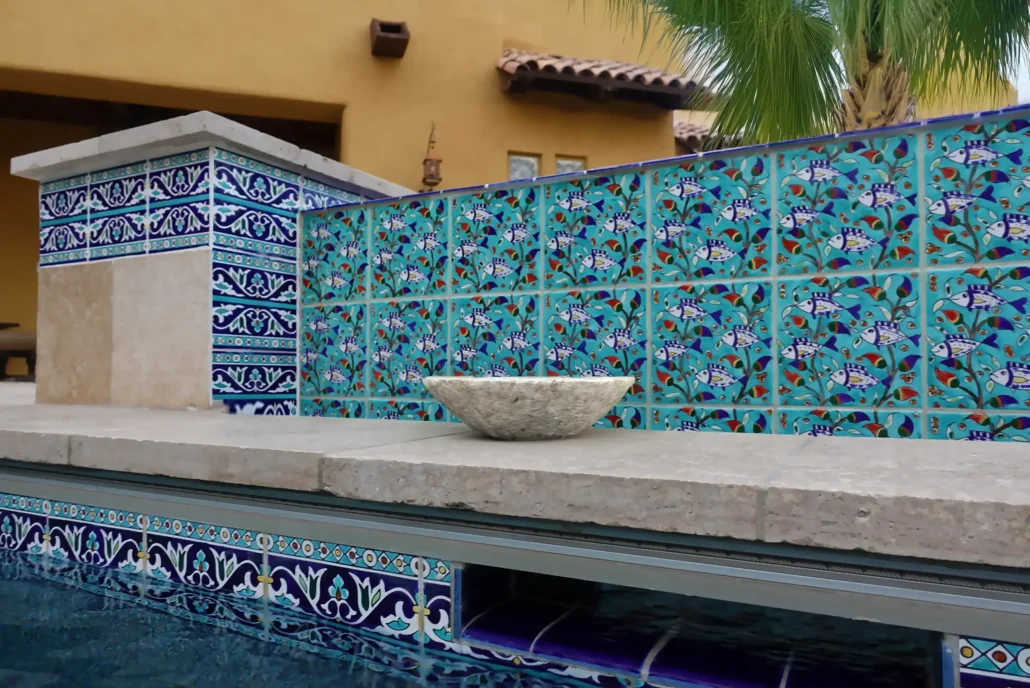
A project in Arizona, USA, with Balian Ceramics’ Aqua Light blue series 6×6 inch pool tiles
Waterline Pool Tile Installation and Replacement Guide
New pool installation
On a new inground pool, waterline tile installation happens after the shell is formed and before the interior plaster finish is applied. The tile setter applies a pool-grade thinset adhesive to the shell at the waterline band, sets the tile, and finishes with a pool-rated grout. The plaster is then applied flush to the bottom of the tile, creating a clean, waterproof transition between the tile surface and the pool interior.
Waterline pool tile replacement
Inground pool waterline tile installation as a replacement project requires partially draining the pool to expose the waterline, carefully chiseling out the old tile and adhesive, preparing the substrate, and installing the new tile with fresh thinset and grout. This is a job for a professional tile setter experienced with pool installations. The process typically takes one to three days depending on pool size, plus curing time before the pool can be refilled.
Signs that it is time for waterline pool tile replacement include persistent staining that cannot be removed by cleaning, tiles that are cracking or coming loose, grout that is deteriorating or turning dark with embedded algae, and significant calcium deposits that have permanently etched the tile surface.
Grout selection matters as much as the tile
For any pool waterline application, use an epoxy grout or a polymer-modified sanded grout rated specifically for wet, chemical, and submerged environments. Standard grout deteriorates rapidly in pool water, allowing moisture infiltration behind the tile — which causes adhesive failure and tiles falling off the pool wall. Proper grout selection is as important as the tile material itself in any waterline pool tile installation.
How Much Does Waterline Pool Tile Cost in the USA?
Waterline pool tile costs in 2026 range widely based on material quality, tile size, and the complexity of the decorative pattern. Here is a realistic breakdown for US homeowners planning a new installation or a waterline pool tile replacement.
| Tile type | Material cost (per sq ft) | Installed cost (per linear ft) | Best for |
| Standard ceramic | $3 – $12 | $12 – $25 | Budget-conscious pool renovations |
| Premium decorative porcelain (incl. Balian Ceramics) | $12 – $40 | $25 – $60 | Distinctive, long-lasting waterline tile installation with maximum durability |
| Glass mosaic pool tile | $15 – $100+ | $35 – $120 | Luxury builds and saltwater pools |
| Natural stone pool tile | $10 – $60 | $25 – $80 | Resort-style organic designs |
For a standard 30-foot pool perimeter, total waterline pool tile installation typically runs between $750 and $2,500 for standard ceramic or porcelain materials, rising to $3,500 or more for premium decorative porcelain or glass tile. Labor generally accounts for $10 to $20 per linear foot of the total installed cost.
When budgeting for a waterline pool tile replacement, also factor in pool draining and refilling costs, grout and adhesive materials, and any substrate repair that may be needed before the new tile can be set.
Frequently Asked Questions About Waterline Pool Tiles
What are waterline pool tiles?
Waterline pool tiles are a band of tiles installed at the water’s surface level on the interior pool wall. They protect the pool shell from chemical buildup, oils, and freeze-thaw damage, and they are the primary decorative element visible both from the pool deck and from within the water.
Do I actually need waterline tiles on my pool?
Yes. Without waterline tiles, oils, sunscreen, calcium, and minerals absorb directly into the pool shell at its most vulnerable point. Over time this causes permanent staining, surface degradation, and in cold climates, freeze-thaw cracking. Waterline pool tiles are a functional necessity as much as a design choice.
What is the best waterline tile for a saltwater pool?
Impervious-rated porcelain tiles (water absorption below 0.5%) and glass tiles are the best waterline pool tile options for saltwater pools. Balian Ceramics porcelain tiles, with their additional transparent glaze topcoat, are specifically engineered for the corrosive demands of a saltwater pool environment. Always use an epoxy-based grout alongside any waterline tile for saltwater pool installations.
What size tile is best for a pool waterline?
The most common waterline pool tile sizes are 4×4 and 6×6 inches for a classic, clean look, and 2×2 inch mosaics for decorative or curved installations. Smaller pools scale better with smaller tiles. Larger pools can carry 6×6 or larger format tiles. Elongated rectangular tiles suit modern and minimalist pool designs.
How much does waterline pool tile replacement cost?
Waterline pool tile replacement in 2026 averages around $25 per linear foot installed for standard materials. For a standard 30-foot pool, total project cost typically runs from $750 to $2,500 for ceramic or porcelain tile, and $3,500 or more for premium decorative porcelain or glass. Labor, pool draining, and grout and adhesive materials are additional costs to budget for.
Can porcelain tiles be used at the pool waterline?
Porcelain is in fact the best-performing material for pool waterline tile applications. Its near-zero water absorption, chemical resistance, and freeze-thaw resilience make it the top choice for both new inground pool waterline tile installations and replacement projects across all US climate zones.
How do I clean waterline pool tiles?
Routine brushing during regular pool maintenance removes most buildup from pool waterline tiles. For calcium deposits, use a non-abrasive tile cleaner rated for pool use. Avoid steel wool or abrasive pads that can damage the glaze surface. Maintaining proper water chemistry — especially calcium hardness at 200–400 ppm — is the single most effective preventive measure for keeping any pool waterline tile looking new. For a full walkthrough, see our guide on how to clean waterline pool tiles.
What makes Balian Ceramics waterline pool tiles different?
Balian Ceramics produces its pool tiles on a high-fired porcelain base and then applies an additional coating of transparent glaze over the decorative surface before a final firing. This double-glaze process creates a tile with a near-zero porosity surface that outperforms standard single-glaze porcelain in chemical resistance, stain resistance, and ease of cleaning — all critical performance factors at the pool waterline. The transparent topcoat also enhances the visual depth of the decorative pattern, making the color and detail appear more vibrant both in and out of the water.

A project in California with glossy and matt 6×6 inch handmade porcelain swimming pool tiles
Balian Ceramics | www.armenianceramics.com
Handmade porcelain waterline pool tiles — shipping across all of the USA